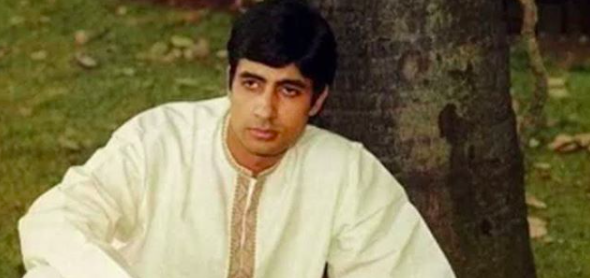
Amitabh Bachchan: Beyond Nav Rasas – Day 1895

By Uncategorized

In a career spanning five decades and approximately 235 films across genres, the actor is primarily identified as an angry young man and his critics are to be blamed for this. He was never given credit for his varied, versatile performances and he once said that since critics feel that he only plays the angry young man he will continue to play angry middle-aged man and later, angry old man roles.  His cynicism came out of deep hurt.

Today, fifty years later, all his detractors have mysteriously disappeared, today Amitabh Bachchan is the undisputed phenomenon.

My mind rewinds to 2009, the release of my second book on the actor, Bachchanlia. I had just received my advance copy of the book and leafing through the 300-plus page coffee table book, featuring all his film posters from Saat Hindustani/ 1969 to The Last Lear/ 2009, I marveled at his extra-ordinary career and more, his courage of conviction to pursue  these films without getting  affected by the constant criticism he was subjected to by the media.

It would have been so easy for him to get demoralized by his detractors. He didn’t, instead he followed his path relentlessly. A complete artiste is one who can portray all the nav rasas and Amitabh Bachchan’s filmography is a proof all the hues and the fragrance of the nav rasas and more…
To be continued
Happy Birthday Rekha – Day 1892

By Uncategorized

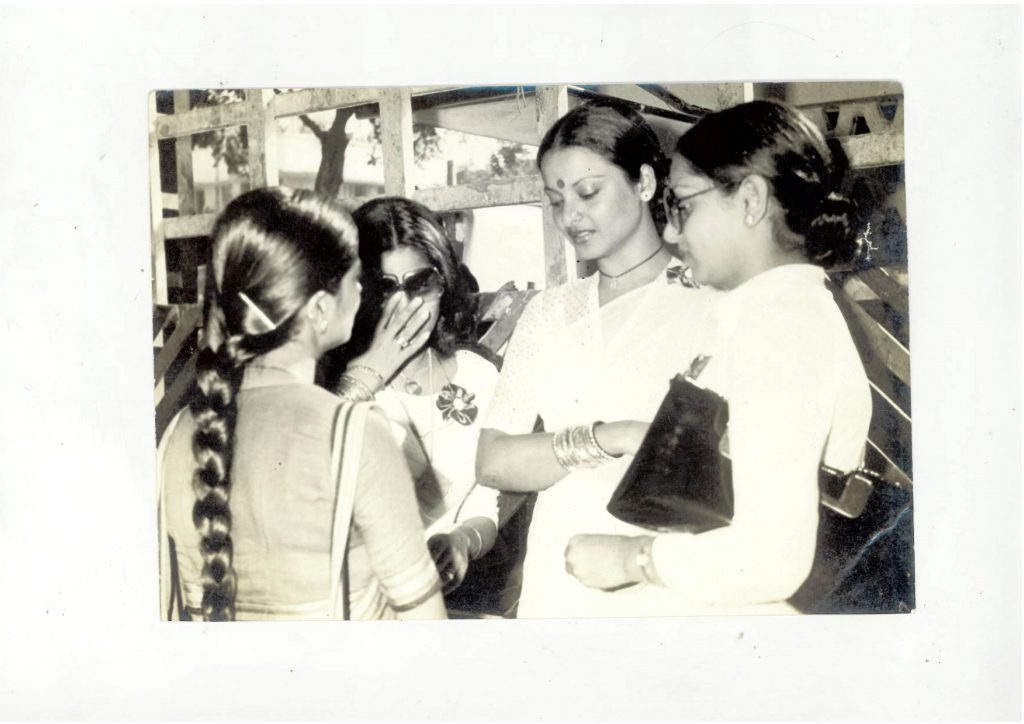
Happy Birthday Rekha
On October 10 is the screen Goddess Rekha’s birthday. The world knows her as a Diva and her fans look forward to spotting her at award events, draped in her trademark gold sari with traditional jewelry. Graceful, shy and always reserved.
There was a time however when she was not as guarded. When she was spontaneous and child-like and those who interacted with her in the seventies and the eighties will understand what I am saying.
“The day Rekha starts behaving like Rekha, it will be the end of Rekha” she said to me one day, while discussing star attitudes. She emphasized that she would never change, “Well at least I pray that I don’t”. Then, Rekha was a dreamer, high strung and sensitive. She saw beauty in the sun and the stars
and collected butterflies.
Years rolled into decades and mega stardom ushered many highs and many lows. Time changes circumstances and circumstances change people. The core of Rekha remained as pure as she had promised. She was as wholesome and compassionate as olden times but less impulsive now and more mellow.

Shakuni Mama – Day 1891

By Uncategorized

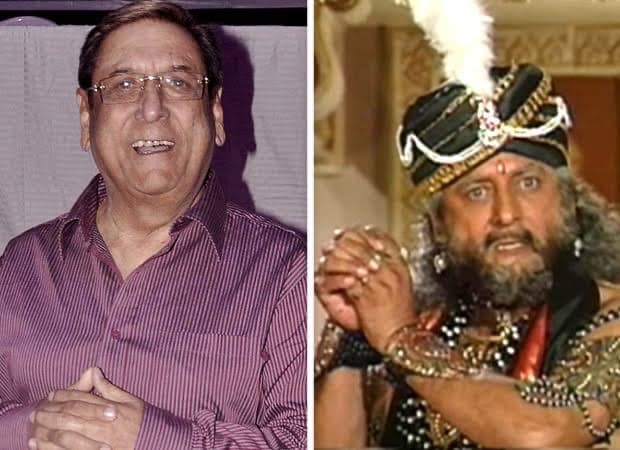
A few days ago, the entire team of Mahabharat appeared on Kapil show celebrating the birth anniversary of serial director Ravi Chopra. During the candid chatter with the anchor it was revealed that Gufi Paintal was not the original choice to play Shakuni mama, in fact filmmaker BR Chopra had hired the theatre actor to audition all the characters for the serial. Paintal had more or less finalized the cast but Shakuni was yet to be cast. Somehow, they did not get an actor who could project the menace that the character demanded.

One day, BR Chopra watched Paintal brief the actor who had come for audition and after he had gone suggested to Paintal that he stop auditioning more actors and start preparing for the role himself and rest of course is history. This incident is in memory ofGufi Paintal who celebrated his birthday yesterday.

I’m sure there are many more similar stories and what comes to my mind is Bhumi Pednekar hired by YRF to audition new girls for Dum Lagake Haisha. Pednekar auditioned innumerable girls but did not find a right candidate, then one day, producer Aditya Chopra saw her enacting a scene and suggested that they stop auditioning because he had found his heroine, Bhumi Pednekar.

Mother, spouse, mother-in-law – Day 1888

By Uncategorized

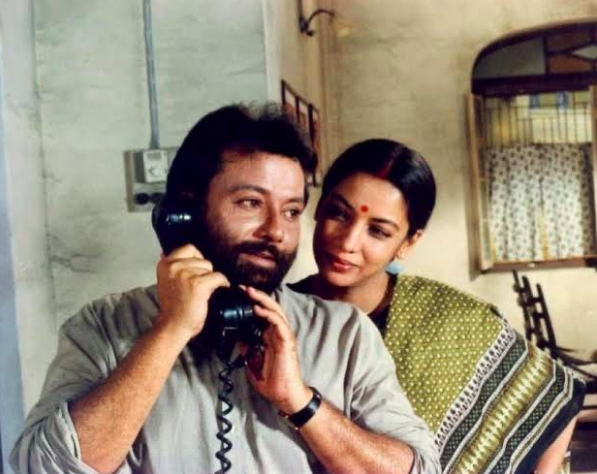
Shabana often jokes that Kalpana Lajmi’s Ek Pal is her tit for tat to Naseerudin Shah for for his misdoing in Masoom, where Shah betrays Azmi and fathers former colleague Supriya Pathak’s child/ Jugal and in Ek Pal, Shabana becomes pregnant with old pal Faroque Shaikh’s baby while being married to Naseerudin Shah.
All her films portrayed Shabana Azmi facing new challenges. In Jeena Yahan the couple is struggling to survive in a metropolis. In Yeh Kaisa Insaaf, the married daughter is responsible towards her dependent maiden family. In Kamala, as the wife of the journalist who purchases a tribal girl to validate his story, Azmi is outraged by his audacity. Her characters were capable of rage and also extreme compassion. Seema in Ek Doctor Ki Maut is offended by her husband’s persistent preoccupation but is at the same time supportive of his brilliance and selfless research for a a vaccine. She often feels sad and isolated from his world but in crisis, is his only anchor.
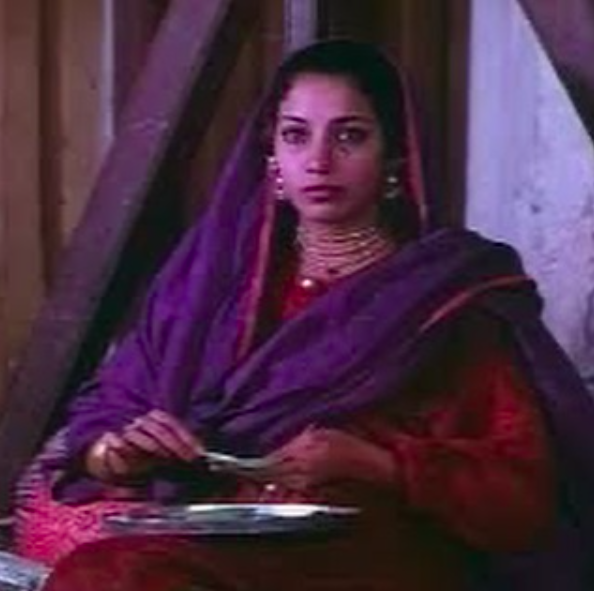
In contrast, Imtiaaz Begum of In Custody is selfish and ambitious. She has no qualms of reciting her poet husband’s couplets as her own and that’s because Begum is a survivor. In Custody was more about poetry and a dying culture than about marriage. There were some films, where the message was bigger than the character and in these films, the couple was usually well adjusted whether they were migrants (Naseer-Shabana) in Paar or weavers in Susman (Om Puri- Shabana) their concerns were the same.
If Fire was about choices, then Morning Raga was about melody and Neerja about the loss of a loved one. The fact is that Shabana Azmi has portrayed as many powerful roles outside marriage space as well but I’ll tell you about that in another blog, another time.

Concluded

Shabana, marriage and child -day 1887

By Uncategorized

All her films addressed either a socio/ political or family concerns and Shabana Azmi’s directors relied upon her to deliver a strong message. So, if the school teacher’s wife Sushila is a victim in Nishant, Meena Joshi in Shaque stalks her husband to unravel the truth. Saudamini is yearning for her beloved in Swami while Firdaus is forever nagging the handsome Shashi Kapoor Junoon.
She is oppressed in Swarag Narag and the most efficient daughter-in-law of a large joint family in Aapne Paraye who can face up to every challenge but crumbles every time her husband/ Amol Palekar is taunted for not contributing to the family kitty. It was a beautiful film about family politics and women power in the kitchen.
In Thodi Si Bewafayee, Shabana is unwilling to forgive her husband’s slip-up and in Arth, she refuses to take him back after his betrayal. The last scene of the film when Kulbhushan Kharbanda seeks forgiveness and desires to return home, Pooja has just one question: Had she done what he did and wanted to return, would he take her back? Kharbanda shakes his head and Shabana responds, ‘That is my answer’.
In Masoom it was not another woman but a child who threatens the happy family. The film opened to furious debates if Shabana’s character was unduly harsh towards the child but director Shekhar Kapur was convinced that Indu’s hostility is a reaction of her anger towards her husband. The opening scene of the film where the kids are pestering the mother to allow them to keep a pet at home (she is is dead against the idea but finally relents to keep the girls happy), is a motif carried forward in the climax when Shabana drops her anxieties accepts Jugal Hansraj as part of the family.
To be continued

Shabana Azmi: Changing face of Indian woman – Day 1886

By Uncategorized

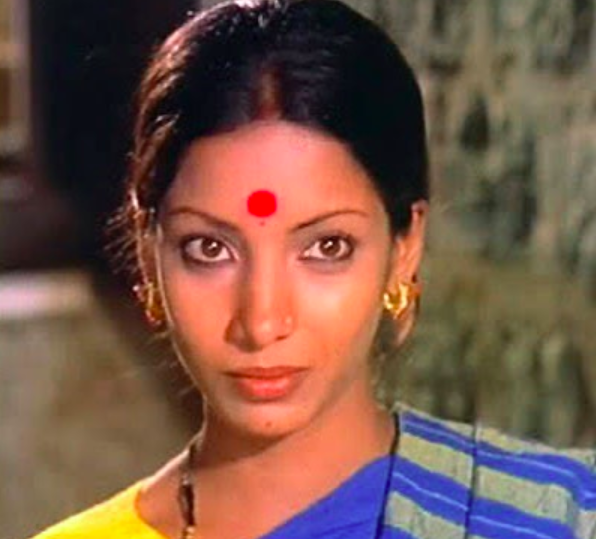
A week ago, actor-activist, ex parliamentarian Shaban Azmi turned 70 and it is a matter of pride that 46 out of the seven-glorious -decade of her life has been devoted to cinema.  Filmmaker Shekhar Kapoor once said that whenever we turn the pages of Indian cinema, Shabana Azmi will be discovered at the turning points.
Azmi reflects the changing face of the Indian woman on screen, not just the modern, working woman but also the homemaker. In the olden days, the heroine was divided between the pious Sita and the evil Shoorpanaka, Shabana Azmi blended her characters with shades of grey to portray a more realistic ardhangini to her husband who reacted according to circumstances.
Launched as a villager in Shyam Benegal’s Ankur, Shabana from the very beginning, juggled all kinds of cinema. If Ankur led to more artistic expressions like Nishant and Kanneshwar Rama, Kantilal Rathod’s Parinay paved a path for the middle of road cinema like Kadambari and more. Shashi Kapoor was Azmi’s first mainstream hero in Fakira and the success of the film led to more commercial films like Amar Akbar Anthony and Parvarish.
To be continued

Sepia Stories/ 34 / Feroze Khan – Last words – Day 1885

By Uncategorized

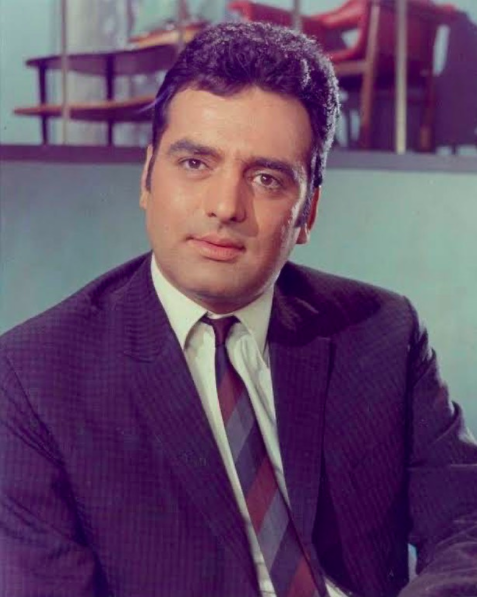
Every time it is Feroze Khan’s birthday, I am reminded of his last interview with me, though at that time neither of us knew that it was going to be his last interview.
 
We had an appointment in the month of April in the year 2009 where he was looking forward to talk about his new film. But on the morning of the appointment, his manager cancelled the date, said Khan saab was under the weather. He fixed another appointment after two days and again cancelled it, said Khan saab was still not feeling up to the mark. Three days later, the manager called yet again and said, Khan saab has confirmed the appointment and promised that this time there will be no cancellation.
 
We met at his office in Lokhanwala Complex, a rather large and buzzing office. He welcomed me into his cabin with his famous charm and smile and we straight away got down to talking business. It was supposed to be a chat about his films but for some reason, he turned nostalgic and began telling me about his childhood, his parents, his siblings, their early struggle and his shift to Mumbai and movies. He compared his relationship with his father to his relationship with his son, said he was in awe of his Abba, while his son Fardeen looked upon him as his friend.
 
Khan said his siblings and he never directly communicated with their father, whatever they had to say to him was always routed through the mother but when he became a father himself, he made certain that he was accessible to all of them all the time. Khan discussed his films too but got emotional when talking about Fardeen’s debut, said he was looking forward to doing more films with his son. “I will always be watching over Fardeen as a father and when I am not there, I will be watching over him from the heaven” concluded Khan.
 
A few days later, Khan passed away, he was only 69. I meet Fardeen at the grand prayer meeting organized for his father. I wanted to tell him about his father’s emotional interview about him but didn’t because there were too many people around us, but someday if opportunity willing, I will.

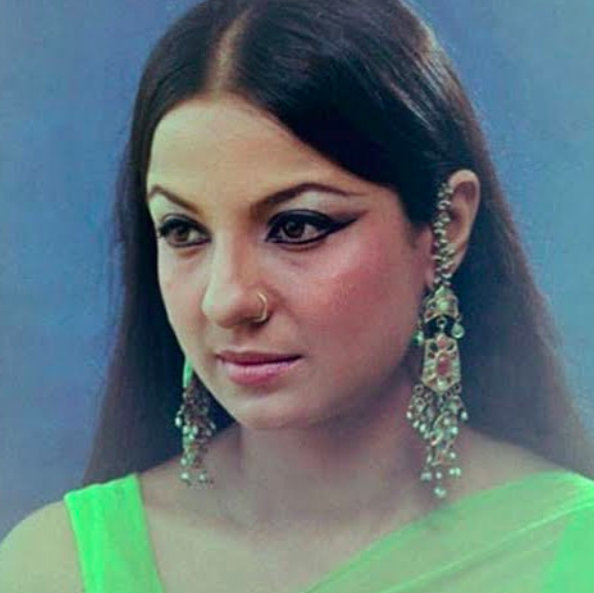
Sepia Stories/ 33/ Happy Birthday Tanuja – day 1884

By Uncategorized

The first time I met Tanja was at her Santacruz residence where the entire S Mukherji family lived together as a large, joint family. Tanuja and I arrived at her door together and as the maid opened the door to let us in, a little Kajol peeped from behind and leapt into Tanuja’s open arms. Tanuja carried her instantly and smothered her with kisses and in baby talk asked her, ‘Mera Kaaju kya kar rha hai?’to which Kajol picked up a jhadu and said ‘Main jhadu lagata hai’.
 
Till as long as I was in the living room talking to her mother, little Kajol was occupied cleaning the floor with her broom while an exasperated Tanuja exclaimed that though her daughter has a trunk full of toys she is only enamored with the jhadu.
 
Over the years, I would often bump into Tanuja and we always managed to strike a meaningful conversation because Tanja is incapable of polite conversations for the sake of it. She is probably among the few actresses to have enjoyed such a long innings in her career- she started as a child star/ Baby Tanuja in the 1950 Humari Beti. In 1960 she got her first adult break/ Chabili and in 1966 her first heroine role/ Baharey Phir Bhi Aayengi produced by Guru Dutt banner but due to Dutt’s untimely demise, Shaheed Latif completed the film and Dharmendra replaced Guru Dutt as the leading man.
 
Tanuja looked and acted differently from other heroines and that is what made her stand apart. Vijay Anand cast her as the second lead in Jewl Thief and she gave us the immortal ‘Raat akeli hai…’in Asha Bhosle’s sexy voice. Soon she was working with all the top heroes, Izzat with Dharmendra, Jeene Ki Raah with Jeetendra, Haathi mere Saathi with Rajesh Khanna and Anubhav with Sanjeev Kumar.
 
After Ek Baar Muskura Do, she married director Shomu Mukherji but that did not intervene her career but post babies, like all other actresses, she was cast as Bhabhi of her once co-star Amitabh Bachahan in Khuddar.

Tanuja was aware that her roles were getting smaller, less impactful so shifted focus to regional cinema (Bengali and Marathi films) for creative satisfaction. Her last film Pitruroon received rave reviews and this birthday as she turns 77 she completes seven decades in cinema which is by no means a small achievement.