Movie Review: Love Aaj Kal (Day 1747)

By Films

Film: Love Aaaj Kal

Release: 14.02.2020

Writer/ Director: Imtiaz Ali

Music: Pritam

Cast: Kartik Aryan, Sara Ali Khan, Randeep Hooda, Arushi Sharma

Director Ram Gopal Verma once told me that he reworked on his old subjects till he had conquered all the flaws which explains why he made so many films on the underworld. Filmmaker Imtiaz Ali probably weaves complicated love stories because he is forever in the process of decoding love.

In 2009 Ali served us a difficult watch called Love Aaj Kal where Jay/ Saif Ali Khan and Meera/ Deepika Padukone part ways and celebrate their breakup with a big bash inviting all their friends.

Now eleven years later, Ali brings another film with the same title and almost similar story where a software engineer Veer/ Kartik Aryan is madly attracted to a struggling event manager/ Sara Ali Khan and cannot stay away from her.

In 2009 Saif Ali Khan played a double role as Jay and as Veer/ Rishi Kapoor’s youth and in 2020 Kartik Aryan plays Veer and Raghu/ Randeep Hooda’s youth. Then, Jay was young and restless and Meera, more mature and composed, this time Veer is self-assured and Zoie is high strung.

It is not just the character names and personality traits that are confusing, the major problem is the complicated screenplay. There are parallel tracks of past and present intercutting scenes with frequent flashbacks and flashforwards which is not just distracting but also annoying. It is unfortunate because Imtiaz Ali is a champion of relationships and all his films (Rockstar or Tamasha) are a reflection of the complex, fragile, insecure characters and the nervous energy they bring to the scenes. His stories are about hope and despair, expectations, disillusionment and desolation.

Ali loves cafeterias, his love scenes and songs are usually around the cafes/ Tamasha, loves strangers becoming beloveds/ Jab We Met, thrives on incomplete communication/ Highway. He loves the mountains, the snow, soulful music and it is all there in Arijit’s voice and Pritam’s composition but you don’t connect to the film, cannot understand what is the issue.

Sometimes, when there is too much to tell you are unable to tell anything and probably that’s what has happened to Imtiaz Ali.

All the actors do their best, Arushi shines as a newcomer, Sara is a natural and Kartik emerges as a dependable actor.

I rate Love Aaj Kal with 2.5 stars.

Bhawana Somaaya  
Long Live Lohanas – Day 1746

By Uncategorized

Long Live Lohanas

Sometimes, forwards work as a boon. A few days ago, my nephew sent me a forward and I have since then been thinking about the two special boys who are working at documenting the Lohana community among the Gujratis.

Subhash Thakrar, a Lohana Gujrati based in UK has always been fascinated with the Lohana history and has researched the descendants of the community along with his other friends like Hasu Manek and Vijay Thakrar.

The trio has over the years interviewed many stalwarts from different generations which include community leaders like Haribhai Samani who was able to offer anecdotal insights about Lohana history. Since there is as such authentic recorded history what Subhash, Hasu and Vijay got about doing was to trace the history with the help of experts.

They connected with Haribhai, PhD at Cambridge University, Dr Katherine Prior and Professor Rohit Barot at Reading University to research whatever data available and were surprised to discover that there are references to Lohanas even in the British history books. On the basis of the accumulative efforts here is the story of the Lohanas.

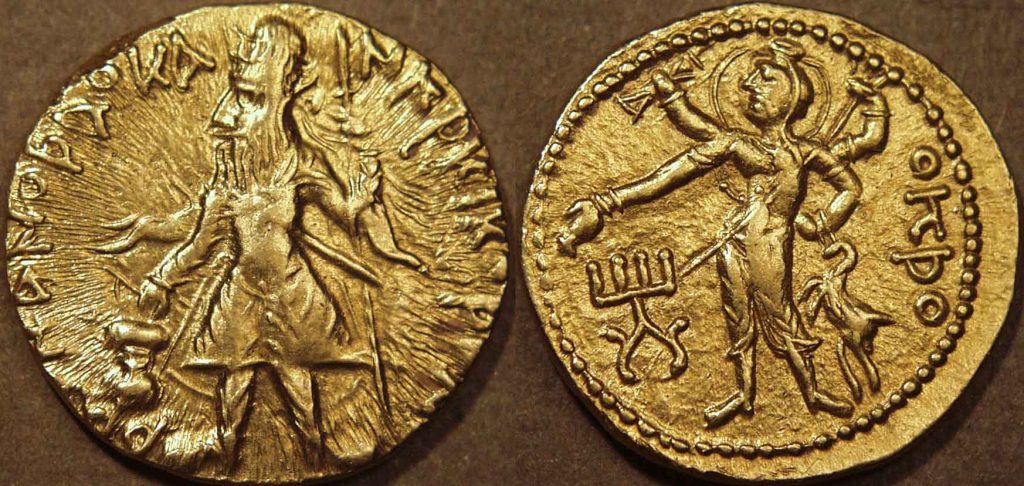
Lohanas hail from a warrior class originating from the borders of Uzbekistan and Afghanistan. This distinguishes Lohanas from today’s other Gujarati communities like Shahs, Patels, Prajapatis, Kutchis  and others, who have at some time or the other been resident of Gujarat, unlike Lohanas  who are immigrants in Gujarat.

In the North West region of the old Indian empire, as was the case all over India (that time British India), there were several kingdoms and Lohanas represented 24 kingdoms each bearing a name like Thakar, Lakhani, Kotak etc. It is the names of these kingdoms that eventually converted to Lohana surnames.

Over the years of evolution, new surnames were added to the list for example, from Thakar we got Thakrar and from Kotak came Kotecha and so on. Some acquired surnames from their business and profession as a result the traders in ghee became Gheewala, accountants transformed into  Mehtas as a result today  there exists approximately 40 to 50 versions of Lohana surnames spread all over the world.

A case study on the Lohana community of North London, which probably represents the largest concentration of Lohanas in the UK, there should be approximately 24,000 or maximum 26000 Lohanas. Leicester is the next biggest concentration in UK should house another 20,000 which means the Lohana presence all over UK will not exceed 100,000.

A similar estimate in US and Americas will aggregate to 100,000 add to this another 50,000 in the Far East, 50,000 in the Middle East, 100,000 in Africa, then we come up with an approximate number of around 500,000 Lohanas living outside India. Of course the largest number has to be in India, that too Saurastra and rest of them in Gujarat and in Mumbai which would include around 1.5 million and therefore Lohanas around the world will be approximately 2.5 m is fair and reasonable.

For a community that originated as warriors/ Kshatriyas it is impossible to find any Lohana in the army or the police force on the contrary Lohanas are revered as a shrewd business community so what brought about such a transformation over the last 800 years? There are many versions and stories say Subhash Thakar and Hasu Manes but more about this tomorrow.

To be continued

@bhawanasomaaya

Movie Review – Malang – Day 1745

By Films

No Mazaa

Film: Malang

Release: 07.02.2020

Director: Mohit Suri

Writers: Aseem Arrora/story, Aniruddha Guha/ screenplay

Cast: Aditya Roy Kapur, Disha Patani, Anil Kapoor, Kunal Khemu

You either like thriller movies or you don’t and if you do, then you have an appetite for all thriller genres. Director Mohit Suri clearly enjoys making thrillers and has made an image for himself weaving intrigue and mystery into complex stories projected by complex characters be it Raaz or Murder 2.

His focus has always been relationships/ Wo Lamhe or Half Girlfriend and heaps it with family conflicts, personal insecurities, emotional drama and haunting melody. This time because the base is Goa he indulges in rave parties, alcohol, drugs, new friends, new love, adventure and loads of excitement!

Malang-Unleash the Madness is the story of Christmas night when a criminal/Aditya Roy Kapur recently released from jail calls a senior cop/Anil Kapoor and warns him of his murder plans. The first half meanders endlessly, is dull and scattered, the second half picks up in pace and action but fails in emotional connect. There are four gruesome murders and before that violent scenes packed with kicks, punches, pistol firing, torture and encounters!

Everything is cold blooded and mechanical, the dialogues are ineffective and the narrative does not engage you, even the music is disappointing except the remix score ‘Aaj ki raat koi aane ko hai’ that builds drama to some extent. Vikas Sivaraman’s cinematography is seductive and yes, the climax has some surprises.

Disha Patani as Saara suits the part, Aditya Roy Kapur has a new image of an action hero after Aaashiqui, Kunal Khemu is promising and Anil Kapoor as always steals the show.

In a party scene, Jessie, a drug dealer asks Saara, ‘Tumhe mazaa chahiye ya sukoon?’ Saara chooses mazaa but after watching Malang I am certain that I not visiting Goa for a long, long time. Now the choice is yours, if you want mazaa you can book your tickets for the film but if you want sukoon, please stay miles away from Malang.

I rate Malang with 2 stars.

@bhawanasomaaya

Lyrical in every frame Day 1744

By Uncategorized

Romance v/s Drama:The story travels two eras immortalized by love letters. The first is written by Nargis to Shahabuddin on her death bed and soaked in tears and it reaches Ashok Kumar 17 years later by which time Shahabuddin has searched for Nargis everywhere unaware that was wilting away in a graveyard. The second is by Salim who accidentally invades into a train compartment and is enamored by the sleeping Meena Kumari’s beautiful feet. He leaves a note at her feet which Sahibjaan preserves in a locket clipped into her hair. The letter and the book mark borrowed from Meena Kumari’s diary pages by Raaj Kumar is the foundation of a heady romance.  There is ample drama when the lovers meet accidentally, part and meet again and Raaj Kuumar sails her into moonlit night and introduces her to the priest as ‘Pakeezah’.

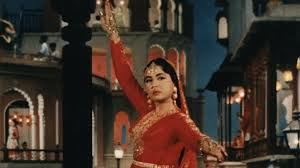
Images v/s Echoes:The film is all about haunting images and echoes. The whistling train is a recurrent motif piercing through dramatic moments in the film. The protagonist seeks refuge from the train and describes herself as a traveler without destination. The film is laced with echoes of ghungroos, thumris, alaaps. Kamal Amrohi transforms every frame into a painting; a pink shikara sailing on a quiet stream attacked by enraged elephants is a volatile moment, also the sudden storm, flying window panes, a screaming bird in a swaying gold cage and a poisonous snake deliberately left lose into the room.

Bhawana Somaaya/ @contact @bhawanasomaaya.com  

Poetry on Celluloid – Day 1743

By Uncategorized

Kotha v/s Kothi:Ashok Kuumar and Meena Kumari lived contrasting lives. Both resided in sprawling mansions but while Kumar’s was a feudal setup, Kumari belonged to the tawaifs who come evening dressed up in fineries and entertained guests.  The nautch girls had a life before dusk.Unlike the kotha the women in nawab homes had no voice and moved freely only when the patriarch was away. In his presence they went behind veils and remained invisible until summoned. What is common between the two was the cultures or the tehzeeb and Kamal Amrohi portrayed both with utmost pomp and glamour.  The concluding scene where the two worlds come together in a wedding and a funeral and Nawabjaan/ Veena breaks down it is done in dignity and Sapru full of remorse mourns in silence.

Mujra v/s Melody: To a great extent the beauty of Pakeezah is associated with its poetry and melody. The haunting background score of maestro Naushad Ali and Ibrahim and combined muse of stalwarts Majrooh Sultanpuri, Kaifi Azmi, Kaifi Bhopali and Kamal Amrohi’s lyrics set to music by erstwhile Ghulam Mohmad are songs for a lifetime. A team of choreographers came together to ensure that every mujra was distinctly different so while ‘Inhi logo ne…’ and ‘Thade rahiyyo…’ by Lachu Mahrajj concentrates on abhinaya, Gauri Shankar’s ‘Chalte chalte…’ is about footwork and ‘Aaj hum apni duaaon…’ about pherras in Kathak dance form. Meena Kumari even though grossly overweight and untrained in classical dance through intricate mudras and mercurial expressions added the navrasas essential to play the eternal seductress in a glittering mehfil of admirers.  ‘Mausam hai aashikana’ is not a mujjra but melody at its peak.

To be continued…

@bhawanasomaaya

Remembering Pakeezah – Day 1742

By Uncategorized

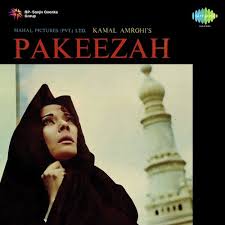
On 04 February Kamal Amrohi’s Pakeezah will complete 48 years almost half a century later the film continues to haunt  you and the heart searches for Sahibjaan. Looking back there were many reasons for this film to become a classic.

Tradition v/s Passion: The storyopens on the dance floor and in between a flickering orange flame and a red chandelier looming large into the frame, a dancer swirls in a flowing dress as the narrator in chaste Urdu recounts the story of courtesan Nargis/ Meena Kumari, who makes the tactical error of falling in love with her client Shahabudin/ Ashok Kumar who rescues Nargis from the kotha but his family will not accept her. Meena Kumari flees to a graveyard in anguish and dies heartbroken after giving birth to a baby girl and Ashok Kumar remains single searching for his Sahibjaan.

In the coming days I will be sharing fascinating details about  an exotic film made by a husband/ Kamal Amtohi for his wife Meena Kumari.  King Shah Jahan made a Taj Mahal for his begum Mumtaz and Kamal Amrohi made Pakeezah for his Mahajabeen whom he called Manju.

To be continued…

@bhawanasomaaya

Movie Review: Jaawani Jaaneman – Day 1741

By Films

Watch it for Saif Khan and Alya

Film: Jawaani Jaaneman

Date: 31.01.2019

Director: Nitin Kakkar

Writer: Hussain Dalal/ story, screenplay. Abbas Dalal/ dialogues

Cast: Saif Ali Khan, Tabu, Alya Furniturewala

‘I want to discuss something personal with you’ says a young girl to Saif Ali Khan at the club. ‘Sure’ smiles Saif ‘should we go to my home?’ The young girl agrees. He organizes the lighting, pours some wine for both and is all geared up for action when she drops a bomb, says there are 33.3 percent chances that he is her father. The scene is hilarious and the film has quite a few of them.

 Jawani Janeman tells the story of a 40 plus London based Jasswinder Singh/ Jass/ Saif Ali Khan who celebrates his independence with a passion every night at the club while his mother worries if he is gay and therefore not inclined to marriage. Jasswinder’s older brother assures his mother/ Farida Jalal that her fears are unfounded and he is witness of his brother’s flirtations.

Jass is sensitive about ageing and visits the salon regularly to touch up his greying. He reserves one evening a month for a family dinner at his parents inclusive of his brother and sister-in-law. With such a packed schedule there is hardly any time for work but is shrewd to crack intelligent brokerage deals every time he finds a vulnerable client.

Jasswinder has no routine, no fixed income as a result he is often delayed in paying house rent and sometimes subjected to power failure because of electricity bill not being paid. Jass is not just irresponsible but seriously commitment phobic and incapable of adjustments. In his bohemian life arrives his young and sensitive daughter from the past Tiya/ Alya Furniturewala who is not just responsible but mature beyond her age.

Jawani Jaaneman is the story of a father-daughter but unlike other movies on the same subject becoming too intense, director Nitin Kakkar (Filmistan) addresses serious issues without melodrama or being judgmental. What works about the film primarily is the splendid humor and the fast pace. The film consciously omits out all the predictable moments making it an engaging watch till the end.  All relationships between all the characters are realistic and all conversations natural. The sets resemble lived in homes and costume reflect choices not just brand display.

The pace tentatively drops in the second half but the narrative adds excitement with sparkling performances. Kiku Sharda is fantastic in his one scene at the hospital and Kubra Sait as Jass’s friend has great presence. As the meditation queen Tabu is hilarious in a special appearance but the surprise packet is the utterly charming and natural Alya Furniturewala who debuts as Saif Ali Khan’s daughter Tiya.

What can I say about Saif Ali Khan, Khan breathes on screen which few artistes can do un-selfconsciously. This is not the first time he is playing the modern, urbane character and yet every time he brings that something special to his role. Jawani Jaaneman is a chilled out film for a chilled out audience. Do watch it with your beloved/ friend/ family even grandparents.

I rate the energetic, upbeat Jawani Jaaneman with 3.5 stars.

Bhawana Somaaya

Movie Review: Happy Hardy and Heer – Day 1740

By Films

Himesh Reshamiya seriously tries

Film: Happy Hary Heer

Release: 31.01.2020

Two characters with the same face, Happy/ Himesh Reshamiya who is settled in Punjab/ India and is a wastrel, his friends call him a loser. The other, Hardy/ Himesh Reshamiya is a top businessman in London and also a successful performing artiste. The consolation is that there is no connection between the two characters, no previous birth telepathy, no separation in childhood stories and no mysterious flashback of the mother.

The heroes meet only post interval and fortunately feel no sense of attachment, there is not the slightest curiosity about their identical appearance and no dialogues like ‘Tumhari shakal meri shakal se kyon milti hai’.

I was dreading to watch a Himesh Reshamiya film because indulging him as a singer/ composer is entirely different from watching Himesh Reshamiya as an actor and all experienced this over the years since Aap Ka Suroor /2007, Karz/ 2008, Xpose/ 201 and Tera Suroor/2016 so I was vastly relieved to discover that in 2020 Himesh Reshamiya has finally identified his USP and gone all out to projects it unapologetically.

The film is an extension of the actor – his brand of music, his style of dressing and dialogues, uninhibited and unpretentious. If you can accept this as part of Himesh Reshamiya person and let him weave his stories in his melodies, then Happy Hardy Heer is definitely entertaining with exotic locations and haunting music. As an actor Reshamiya has come a long way and seriously tries to give his best to his characters.

Some artistes are meant to fly solo and Himesh Reshamiya is certainly one of them, listing the demerits of the film will be taking the film too seriously and I don’t want to do that so I’ll him hum ‘Teri meri kahani’ and sign off  rating Happy Hardy Heer with 2.5 stars.

Bhawana Somaaya