Bhopal Diary 1 – Day 1971

By Uncategorized

The Rabindranath Tagore University and Public Relations Society of India, Chapter Bhopal honoured media personalities from different mediums. It was a sparkling event where everyone on the dais made sparkling speeches and the best of academics were seated in the auditorium. All credit for the special event goes to Shri Pushpinder Pal Singh and his extra-ordinary team.

God of details – Day 1970

By Uncategorized

Aamir Khan’s directors are used to his over thinking and at times his idiosyncrasies. On the sets of Indra Kumar’s Ishq he was shooting a garage scene when suddenly Aamir called for a cut! Everyone was surprised but Aamir hd a reason, “Yaar Indu ye pasina workout ka pasina lag raha hai, while my perspiration should resemble a struggling mechanic toh kuch karo please?” There was a brief silence and then the whole unit burst out laughing because nobody had an answer to his query!!!Those who work with Aamir are prepared for strangest questions and film industry is full of such stories.

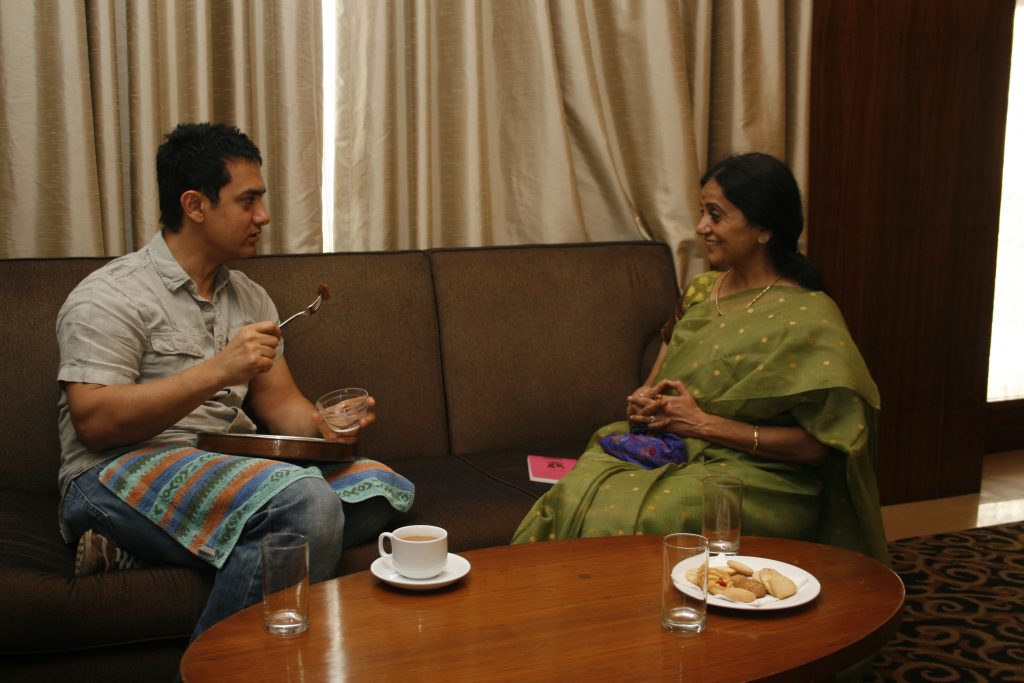
Shabana Azmi recalls that one day, while serving Aamir tea at her home, she asked how much sugar he would prefer? Aamir asked her to demonstrate the size of the spoon, then the shape of the cup and finally confessed that he was unaccustomed of taking minor decisions at home. Shabana never invited Aamir for tea again. The problem with him is that he is complicated and also extremely simple.

In 2001 traveling with him for the preview of Lagaan I asked if he was satisfied with the film? Aamir drummed on the steering wheel of the car and smiled. I had got my answer and so had everybody by the end of the week. In the coming years, Aamir Khan blossomed as an actor in a variety of roles be it Dil Chahta Hai, Mangal Panday, Rang De Basanti, Fana, Taare Zameen Par, Ghajini, 3 Idiots, Dhoom 3, PK, Dangal. Thugs of Hindustan was a letdown but Lal Singh Chadha is waiting round the corner to redefine the superstar game yet again.

Dil Hai Ki Maanta Nahi and more – Day 1969

By Uncategorized

More than a decade passed by, and Aamir Khan delivered some flops/ Anwal Number with Dev Anand, Parampara with Yash Chopra, Andaaz Apna Apna with Raj Kumar Santoshi, some superhits Dil, Hum Hain Rahi Pyaar Ke, Rangeela, Raja Hindustni, Ishq, Ghulam and some unconventional projects like Deepa Mehta’s Earth and John Matthan’s Sarfarosh.

Two films made during this decade stand out in my memory for special attention. Dil Hai Ki Maanta Nahi when we organized a cover shoot between the lead pair Pooja Bhatt and Aamir Khan and the shoot almost did not happen because Aamir ragged Pooja relentlessly and Pooja refused to shoot with her bully hero apologized. They fought like kinder garden kids squabbling over their pencil-rubbers, while my photographer Gautam Rajyadhaksha waited for the madness to subside!

Interestingly the same actor could also be extremely mature. I was visiting his shooting of Baazi on a Navratri night when he had to perform a complex scene, post the shot Aamir explained that responses of an actor to a scene is determined by the instruction given by the director and Ashutosh is a master of perfect instructions. “In the scene just enacted Ashu asked me to be clumsy and altered the position of the phone, so while bending on the other side to receive the call, I automatically turned clumsy”.

To be continued

Aamir Khan, looking back, looking forward – Day 1968

By Uncategorized

When Aamir Khan’s uncle Nasir Hussain engaged him in a small role as a child star in Yaadon Ki Baarat, little was he aware that he was laying the foundation for a dream that would last forever. Soon he played another young role/ Madhosh and a decade later, Khan was ready to assist on projects that came his way, Paranoia and Manzil Manzil.

Director Basu Bhattacharya’s son Babla Roy was Aamir’s friend and he asked him to star in his experimental film Holi and Aamir agreed. In 1988 uncle Nasir Hussain launched his son and nephew in Qayamat Se Qayamat Tak and the launch campaign became the talk of the town.

I met Aamir Khan soon after the release of QSQT because our magazine was doing a special issue where stars were writing personal accounts of childhood. Aamir Khan agreed to participate but had a condition that not a single line/ word should be edited/ deleted and I disagreed and so Aamir opted out of the special issue.

To be continued

O Roohi wapas mat aana – Day 1967

By Uncategorized

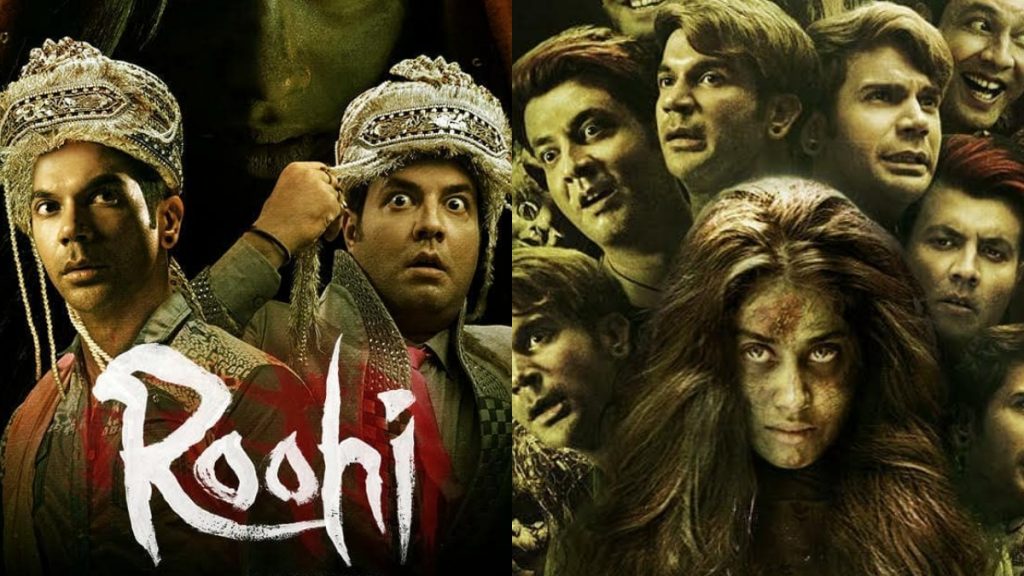
Film: Roohi

Date: 11.03.2021

Director: Hardik Mehta

Cast: Rajkummar Rao, Janhvi Kapoor Varun Sharma

Ratings: 2 stars

In 2018 director Amar Kaushik released Stree, his first experiment with the horror comedy genre. Two years later, director Hardik Mehta makes a sequel of Stree called Roohi.  While Stree stunned us with its refreshing content, Roohi renders us speechless in disappointment.

In the beginning you feel that they have probably changed the plot and therefore the slack in pace, in fact the opening sequence describing makes you wonder if this time it is going to be a thriller. A few scenes later you decide that that this is going to be a story of friendship, a typical Jay/ Rajkumar Rao and Veeru/ Varun Sharma bonding

There are funny musical interludes almost every 15 minutes and a song every 30 minutes and you finally conclude that this film is not a thriller/horror/comedy but a musical after all but a few more scenes into screen time and you are proved wrong yet again!

The problem with Roohi is that it has a nonexistent screenplay and the director has too many things to say. Agreed that India is a country that lives in multiple centuries simultaneously but is that be an excuse to serve ancient practices in the name of entertainment to film audience?

There’s just one dialogue in the entire film that refers to medical practice be it mental health or split personality syndrome and just one scene that emphasizes on the importance of science, the remaining film is only about the planetary stars, the tantric, the evil practices during the eclipse, sometimes the full moon night. There are constant mentions of the spirit, ghost, demon, the priests, chanting, offerings, sacrifices, terrifying movements of the head, forced tonsure, burning of hair and many more ridiculous things!

The actors, Jahanvi Kapoor, Varun Sharma, Raj Kumar Rao and the legendary Sarita Joshi in a special appearance, try their best to engage us in the incoherent narrative but the poor writing, snail pace and regressive message makes you want to tear your hair in frustration! It is unforgivable that the film promotes superstition and that the the censor board in the existing guidelines certifies a regressive subject that glorifies ancient myths and traditions.

Roohi is probably the first and only horror comedy that neither instills fear nor humors you!

Bhawana Somaaya
Reversal of Roles – Day 1966

By Uncategorized

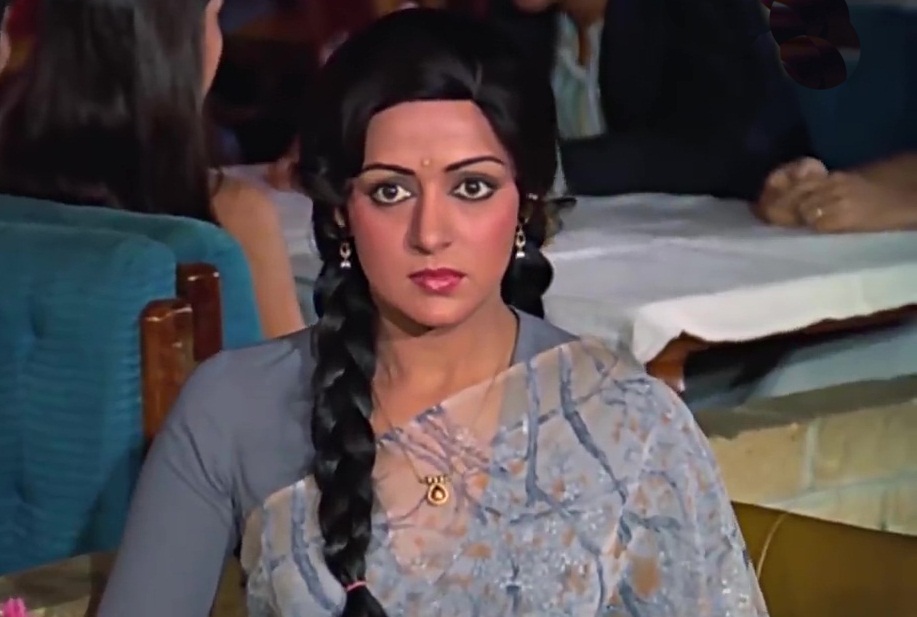
Sometimes, the daughters lent strength to their subjugated parents. Hema Malini in Aap Beeti becomes an airhostess to offer a comfortable life to her ailing parents but till she is trained at her job, her parents need to stay with their son and family where they are ill-treated by their daughter-in-law and leave the house. Hema Malini finds them somehow and transforms their lives. Rekha in Umra-o-Jaan is unable to do that to her mother who has no voice to express herself.  She is aware knows that the tawaif holding the mushaira in the neighborhood is her missing daughter but forbidden to cross the boundary of the home. The courtesan/ Rekha is unable to contain her tears following the frail shadow behind the blinds singing ‘Ye kya jagen hai doston...’ but all they can exchange are moist glances for both know that it is too late to return.

As cinema progressed with time and the mother along with other women characters expressed freely in the screenplay, the narrative became more and more attractive. The memorable characters consequently spread out in all genres and at all times. The oppressed and the regressive roles co-existed as well because life balances all kinds of people, and which is why a Tisca Chopra cried quietly in the carunable to fight her husband’s decision in Taare Zameen Pe the coming years also introduced the courageous/Paa to the unconventional, genius mother/Shakuntala Devi because all of them are reflections of the Indian woman.

 Concluded

Concept of Bhabhi Maa – Day 1966

By Uncategorized

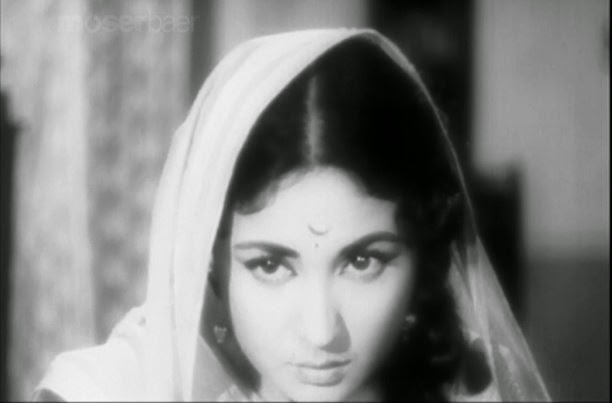
The concept of Bhabhi Maa emerged in films when the director cast a younger heroine to portray maternal feelings and the best examples of these characters were, Meena Kumari in Bhabhi Ki Choodiyaan and Nutan in Chhota Bhai. After so many years, I have not gotten over the beautiful Meena Kumari rising at day break going about her household chores, singing ‘Jyoti kalash chalke…’ while her little devar besotted with her, follows her everywhere. Bhabhi Maa worked not full time but over time and never asked for her dues!

In Chhota Bhai, Nutan has punished her mischievous devar to stand on one foot on the terrace, and he does uncomplainingly. It is only while serving dinner to the family that Nutan realizes that the little boy is still on the terraces and races up the staircase to plead forgiveness. It is a heart-wrenching scene and after all these years, the memory of it brims my eyes with tears. The message being that that woman of the house symbolizes authority and there’s no opposing her!

I disagree that Hindi cinema stereotyped mothers, on the contrary, we saw innumerable shades of the character over the decades both in the art house and in the mainstream cinema. In Mrinal Sen’s Khandahar Jamini/Shabana Azmi lives alone in the ruins with an old, invalid mother and despite the over powering gloom in their lives, Jamini’s optimistic mother hopes that Niranjan will someday come and marry his ageing daughter. He does not.

To be concluded

Saluting Homemakers – Day 1965

By Uncategorized

There is a possibility that the idea of celebrating women was inspired from India. Our mythology has venerated women, the Devi in all her incarnations and our cinema has put the supreme woman, the mother on a pedestal from time immemorial.

In present times when all of us have become obsessed with empowerment, the original naari shakti, that is the homemaker, both on screen and in real life, is feeling isolated and nobody seems to notice that she is suffering from low self-esteem.

Therefore, I dedicate this week column to all the homemakers on the big screen who made me smile, sometimes fear and cry and sometimes, want to protect too.

On top of the list is the kohl-eyed Sulochana singing ‘Nanhi kali sone chali…’ to her newborn in Bimal Roy’s Sujata, all the time overlooking the other baby of a lower caste, who has by coincidence landed in a Brahmin household. What I remember of the sequence is the husband conning the wife to believe that the other baby is feverish and Sulochana unthinkingly touches the ‘untouchable’. The more Sulochana disconnects herself with Sujata, the more determined Sujata is determined to win her affection.

To be concluded