Mumbai Local – Day 1005

By Books, Event

Sun Jan 8 | 5pm
Bhawana Somaaya
A BOOK IS BORN – INTO THE MIND OF A FILM CRITIC
English & Hindi
Critic, Columnist & Author

@DrBhauDaji Lad Mumbai City Museum ~ 2nd Sun, 5 pm
91 A, Rani Baug, Veer Mata Jijbai Bhonsle Udyan, Dr Baba Saheb Ambedkar Marg, Byculla (E)
Save your seat! Click the link and save your seat.

Synopsis:

The role of the critic, the reviewer, is often a fraught one. Many would say that film reviewers are very harsh with film-makers in their critique of a new release. Certainly the film reviewer has the power to affect public opinion on the film, and perhaps even influence the response.
So how do film reviewers do what they do?
What does a film critic go through watching films week after week and commenting on them? Can they be fair? Are they partial? Is their job easy or are they daunted by second or third thoughts often?
What happens when reviewer turns author? Is the craft of writing a book different from writing a review/column? What is she thinking about when she begins writing her new book? Are there doubts?
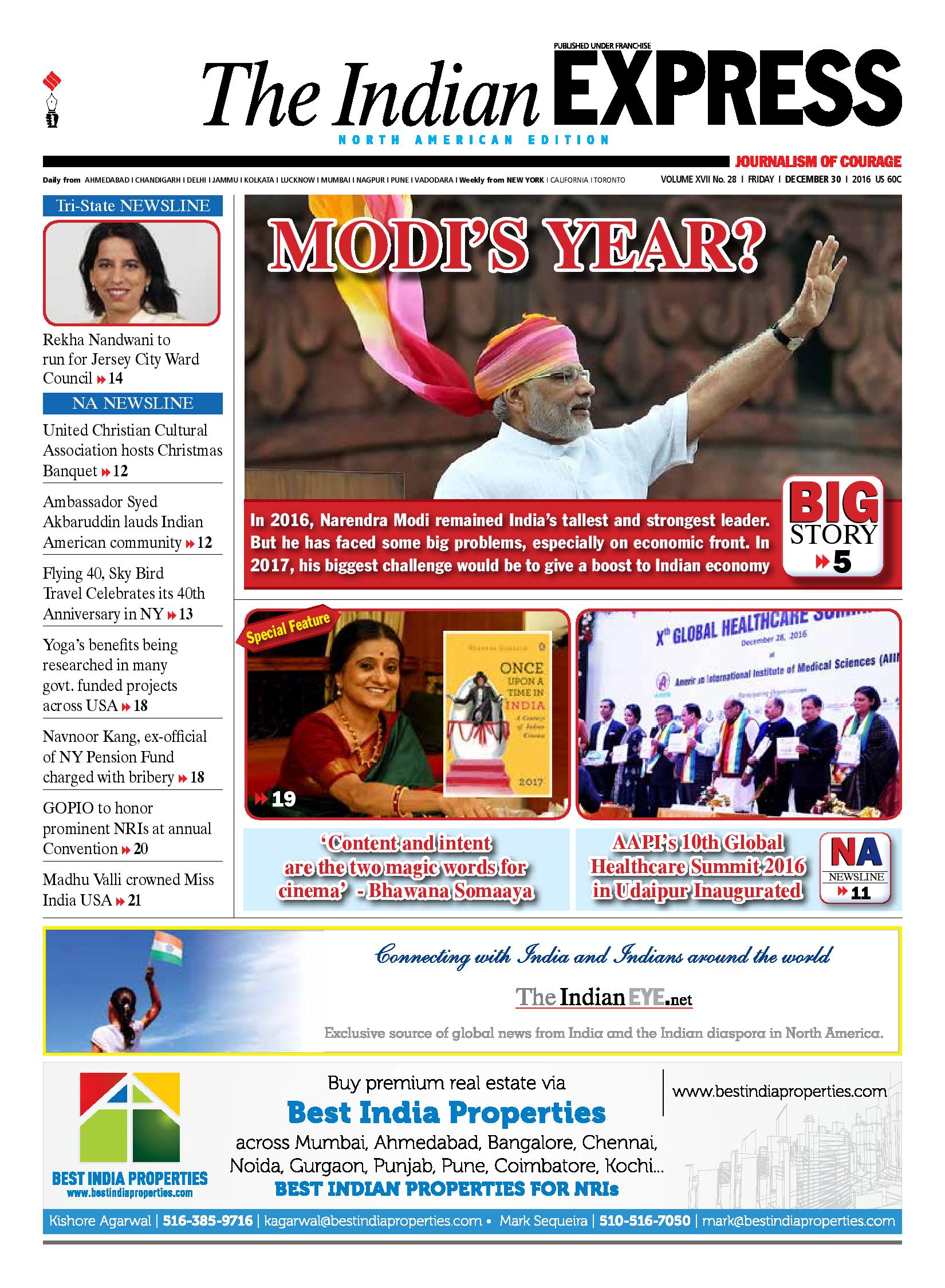
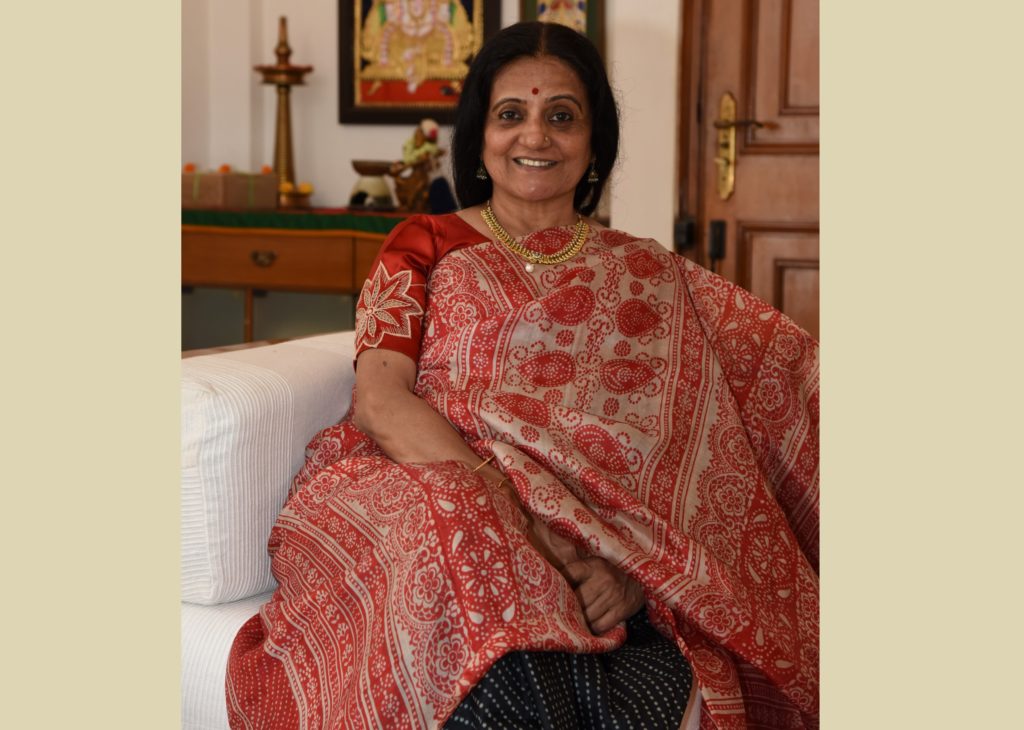
We are delighted to have Bhawana Somaaya – celebrated critic, columnist and author – with us at Mumbai Local. Her story is the story of an unplanned career, of accepting challenges and giving her best shot. Now, 30 years and 13 books down the road, she is easily one of India’s best recognised film experts.

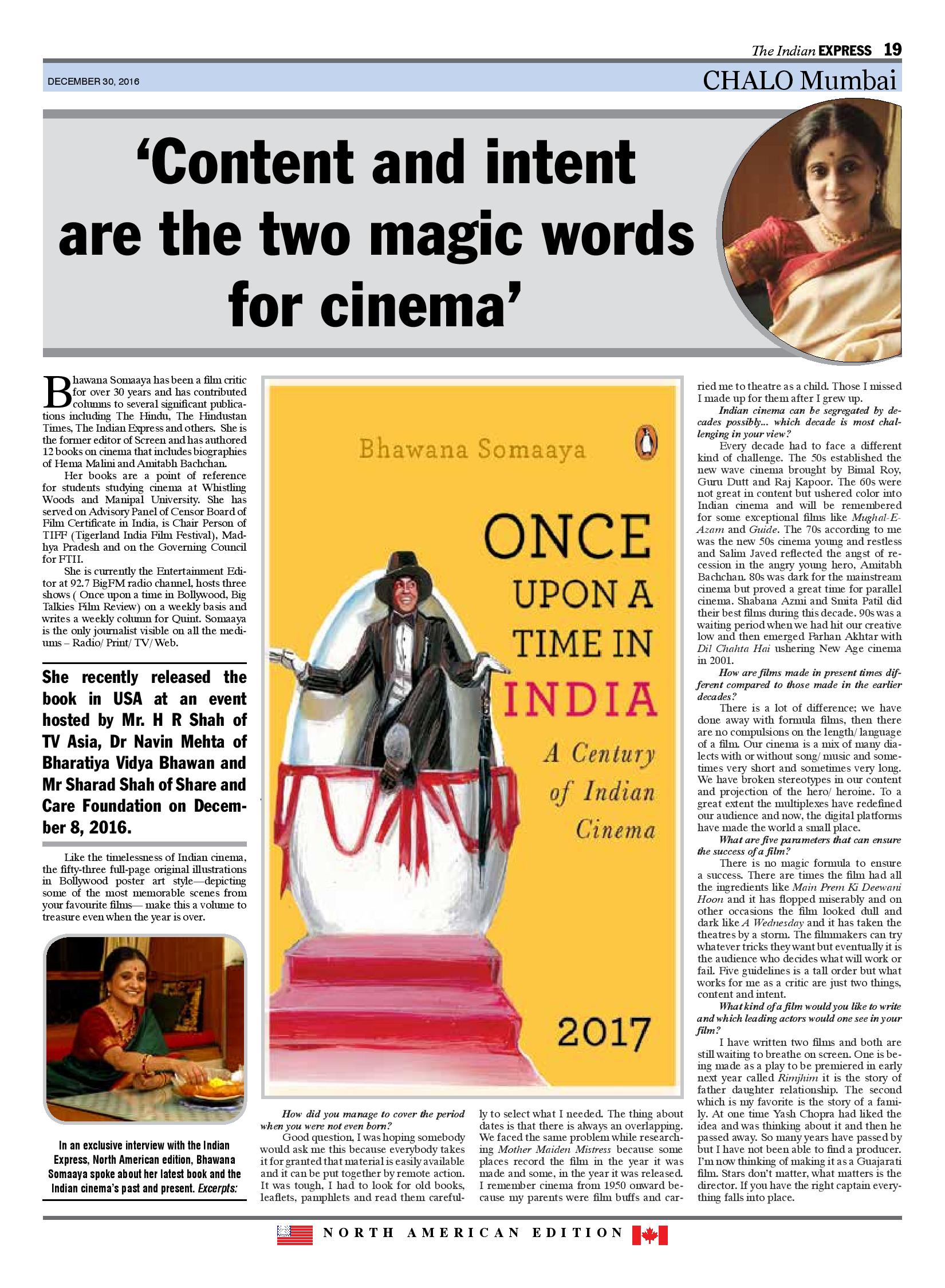
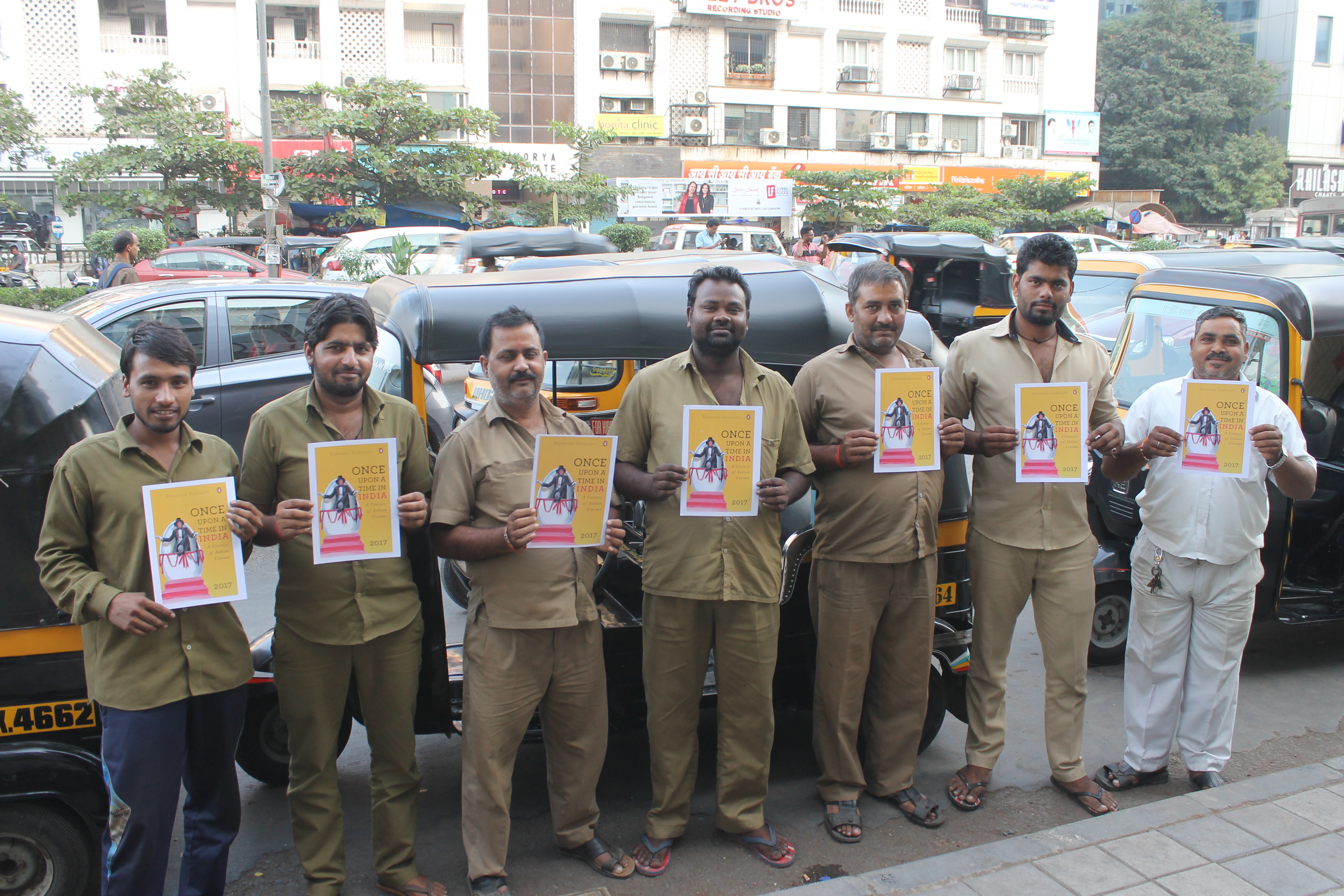
In this Mumbai Local, Bhawana Somaaya will give us an insight into the life and work of a critic and writer. She will reflect on the relationship a critic has with artists, producers and audiences, and the writer with publishers and readers. We can expect an evening peppered with anecdotes, insights and excerpts from her latest book: Once Upon a Time in India: A Century of Indian Cinema. And we can perhaps begin to understand how these roles of critic and documenter balanced precariously and lovingly at the edges of arts practices, are so important to the life of the arts.

Join us this Mumbai Local for a fascinating journey into film through the eyes and experience of a closely-watching, deeply-engaged long-time witness.
Bio:

Bhawana Somaaya has been a film critic for over 30 years and has contributed columns to several significant publications including The Hindu, The Hindustan Times, The Indian Express and others. She is the former editor of Screen and has authored 13 books on cinema that includes biographies of Hema Malini and Amitabh Bachchan. Once Upon A Time In India-A century of Indian cinema is her latest release. Her books are a point of reference for students studying cinema at Whistling Woods, Manipal University and now JNU, Delhi.

She has served on Advisory Panel of Censor Board of Film Certificate in India, is Chair Person of TIFF (Tigerland India Film Festival), Madhya Pradesh and on the Governing Council for FTII. She is currently the Entertainment Editor at 92.7 BigFM radio channel and writes a weekly column for The Quint.

You can read more on Bhawana Somaaya on her website and blog

Save your seat! Click the link and save your seat. To register for the events or for more information, do ask readers to log on to www.junoontheatre.org

What is MUMBAI LOCAL?

Regular monthly programming, of unique engagements with the arts and creativity for you in your neighborhood. Where artists and scientists will come and share their junoon through engaging, delightful, interactive sessions.

Free and open to all on a first-come-first basis. To pre-register, email mumbailocal@junoontheatre.org and For more info visit: www.junoontheatre.org

To connect to the artist for interviews call: Media Consultant Kajal Gadhia 98202 96123 / kajal@mindworkz.in
 

SheThePeople – Day 1004

By Uncategorized

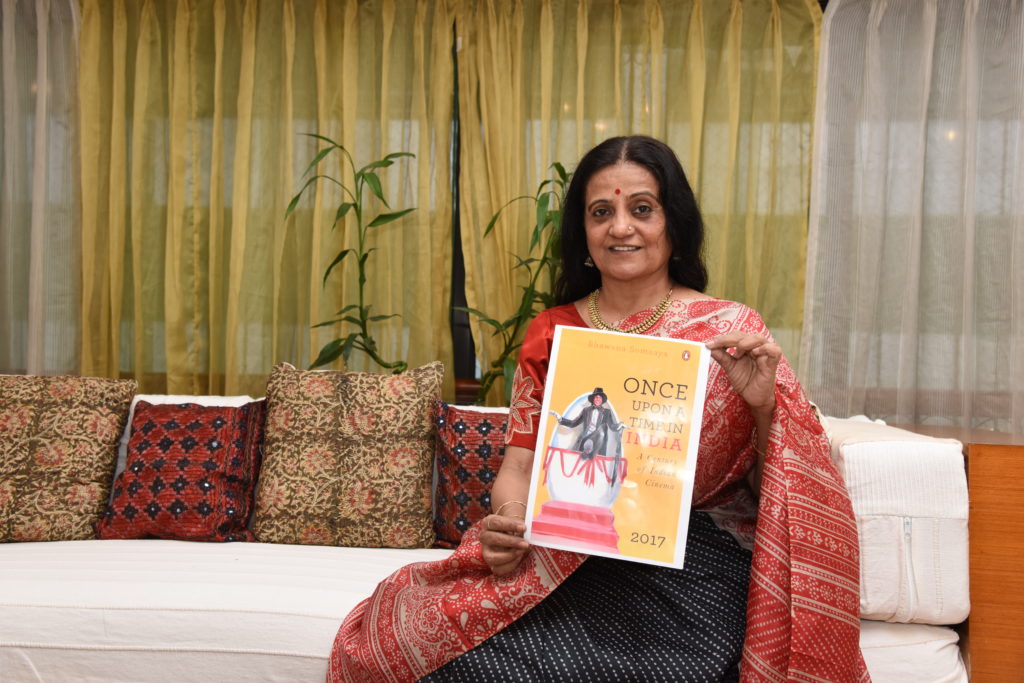
Talking about my upcoming book “OnceUpon A Time In India” with SheThePeople.tv

Your book covers 100 years of Indian cinema. What according to you is the essence of Indian film?

Essence of India cinema for me is the story telling. We are a country of oral history. Our grandmothers tell stories to our grandchildren. That has been the tradition of our country. As a child I was told a story every night if not by my parents then my older siblings and when the lights went out I made my own stories in my head and mixed them all up. Today, our kids like our western parts read story books to bed. I never read story books till I was much older and went to school. It was always somebody narrating stories to me. I loved the build up to these story sessions: the curtains drawn over the windows and the dim light in the room. So many children all put up together on a high four poster bed, the quilt and the security of being huddled together. For me cinema is nostalgia and this book is like visiting a fair and watching the bioscope.

What kinds of research material did you use for the book particularly for cinema in the twenties and thirties, where it was probably harder to come across good archival material?

You are absolutely right, there is very little material available on this era so I went through the regular channels which is I surfed the internet and some old tattered books. Fortunately the book is not a heavy documentation of decades gone by so whatever I found was sufficient.

Have we come a long way in our portrayal of women according to you?

Most certainly, the woman in Indian films has come a long way from the suffering martyr who revered her husband as parmeshwar and what is interesting is that she has taken a long time to evolve and find her identity.  My co-authors Jigna Kothari Supriya Madangarli and I have written a book Mother Maiden Mistress that travels the journey of Indian heroine over five decades.

Which period of Indian cinematic history fascinates you the most?

The silent era does not attract me maybe because I was not born that time but I have heard many stories of that era from my parents. I think the 50s were fascinating because there is a magic about Black & White cinema that leaves you to imagine beyond what you watch on the screen. The 70s was passionate and path breaking and after that cinema changed drastically in 2000 and is changing everyday so to answer your question the 60s, the 80s and the 90s  were not exceptional decades.

 You started as a journalist, write columns and also on the radio, which out of these do you enjoy the most?

When I started as a journalist I thought I would not last one month in the job. I was so shy and withdrawn, so scared of meeting new people and interacting with them that it is a wonder that I have lasted so long in this profession. The first time I was asked to write a column by The Hindu my first thought was how can I deliver the same word count on same deadline week after week? But I was able to d and I’m still doing it. Column writing is a great discipline. Radio happened to me out of the blue, just as journalism happened to me as an accident in the summer of 1978. It was a new medium and a new language/ Hindi but I have survived for seven years.

 What is the most enjoyable part of writing a book, and what is hardest part of writing for this medium?

The most intoxicating part is the idea because then you are impatient to begin writing. I have read about authors going into isolation to complete a manuscript, I have never done it. I have written them along with my regular job as an editor or an anchor. The process of writing is fun even if a bit tiring. The hardest is the final corrections because by then you have been through the manuscript so many times, that you are aching to get over with it. It is like being pregnant and you are desperate to pop it. Every time I go through the final stage, I tell myself I’m not going to write another book in a long, long time, but a year later, I’m at it again.

 Bollywood movies are now better packaged and marketed and digital video is the next big thing. Where do you see the future of the Indian film industry going? What are the hindrances if any? 

We are going through a phase where there is too much emphasis on marketing and packaging. Special budgets are chalked out for promotion of a film. Technology has great advantages and some disadvantages too. In the olden days actors did not have to promote their films, it was the producer and later the distributor’s job. Today, actors have become like netas asking for votes on every television channel. My theory is that the biggest promotions cannot save a bad film and a good film will attract audience anyway.

 What project are you working on next?

I try and aim for a book a year, this time it has taken a long time but I have been working on two manuscripts – the first is on the subject of mythology and the second on Garbhsankar, I’m hoping to publish both in 2017. I have also written a play which should be premiering early next year and a dramatic script which hopefully somebody will make it into a feature film.

What genre of movies do you personally love watching?

I like to watch all films, what I don’t like are the dark films and horror genre. After so many years I’m still easily scared and need to hold hand of the person beside me when it comes to violent and scary scenes. At the media screenings there is a standing joke where nobody wants to sit next to me because I suddenly clutch their hand and don’t let go. I’m learning to grow up and become brave but it is tough!

And a few words on that epic tweet by Amitabh Bachchan?

Please don’t react in this way, what can I say, maybe he liked what he read and saw and mentioned it on his page, I’m flattered and so is my publisher. It is bound to help the sales.

My previous posts can be visited on the following link:

http://bhawanasomaaya.blogspot.in

Life in a metro…. – Day 1000

By Films
.

.

The last decade presents a mix of both rural and urban India, there are diverse dialects and diverse subjects and interestingly audience connects to everything that is well made.

2010: “My name is Khan, and I’m not a terrorist” Shah Rukh Khan/ My Name Is Khan

2011: “Dilon mein tum apni betaabiyan leke chal rahe ho toh zinda ho tum, nazar mein khwabon ki bijliyan leke chal rahe ho toh zinda ho tum…
Hawake jhokon ke jaise aazad rehna seekho, tum ek dariya ke jaise lehron mein behna seekho…
Har ek lamhe se tum milo khole apni baahen, har ek pal, ek naya samma dekhe yeh nigaahen…
Agar apni aankhon mein hairiyaaliyaan leke chal rahe ho, toh zinda ho tum…
Dilon mein tum apni betaabiyaan leke chal rahe ho, toh zinda ho tum” Farhan Akhtar/ Zindagi Na Milegi Dobbara
2012: “Thoda sperm ke upar aa kar dekho, heart naam ki cheez hoti hai” Ayushman Khurrana/ Vicky Donor
2013: “Mera sense of humour bahot achha hai, aapko dheere dheere pata chalega’ Kangana Ranaut / Queen
2015: “Kiski talwar pe sar rakhoon yeh bata do mujhe, ishq karna agar khatah hai toh sazaa do mujhe”Deepika Padukone / Bajirao Mastani.

*No excerpt from the book can be used without prior permission. The book is also available on other online portals such as Snapdeal, infibeam and on bookstore websites such as Crossword, Landmark and Sapna. Apart from this the book is available at all bookstores.

@bhawanasomaaya
My previous posts can be visited on the following link:
http://bhawanasomaaya.blogspot.in

Love you zindagi… – Day 999

By Films

thursdayThe spoken line changed on screen in the year 2000. Now dialogues were a happy mix of English and Hindi and it was all natural.
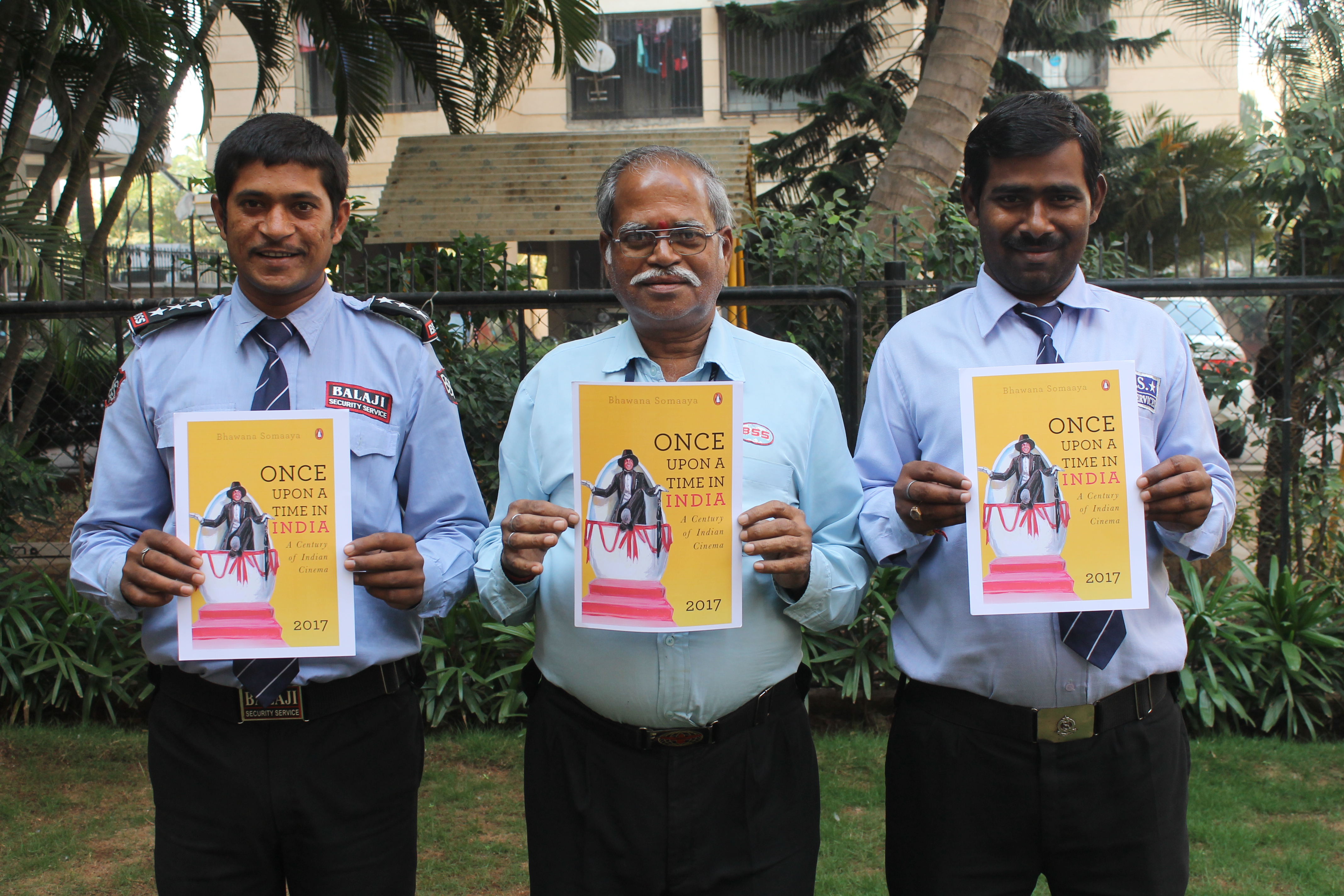
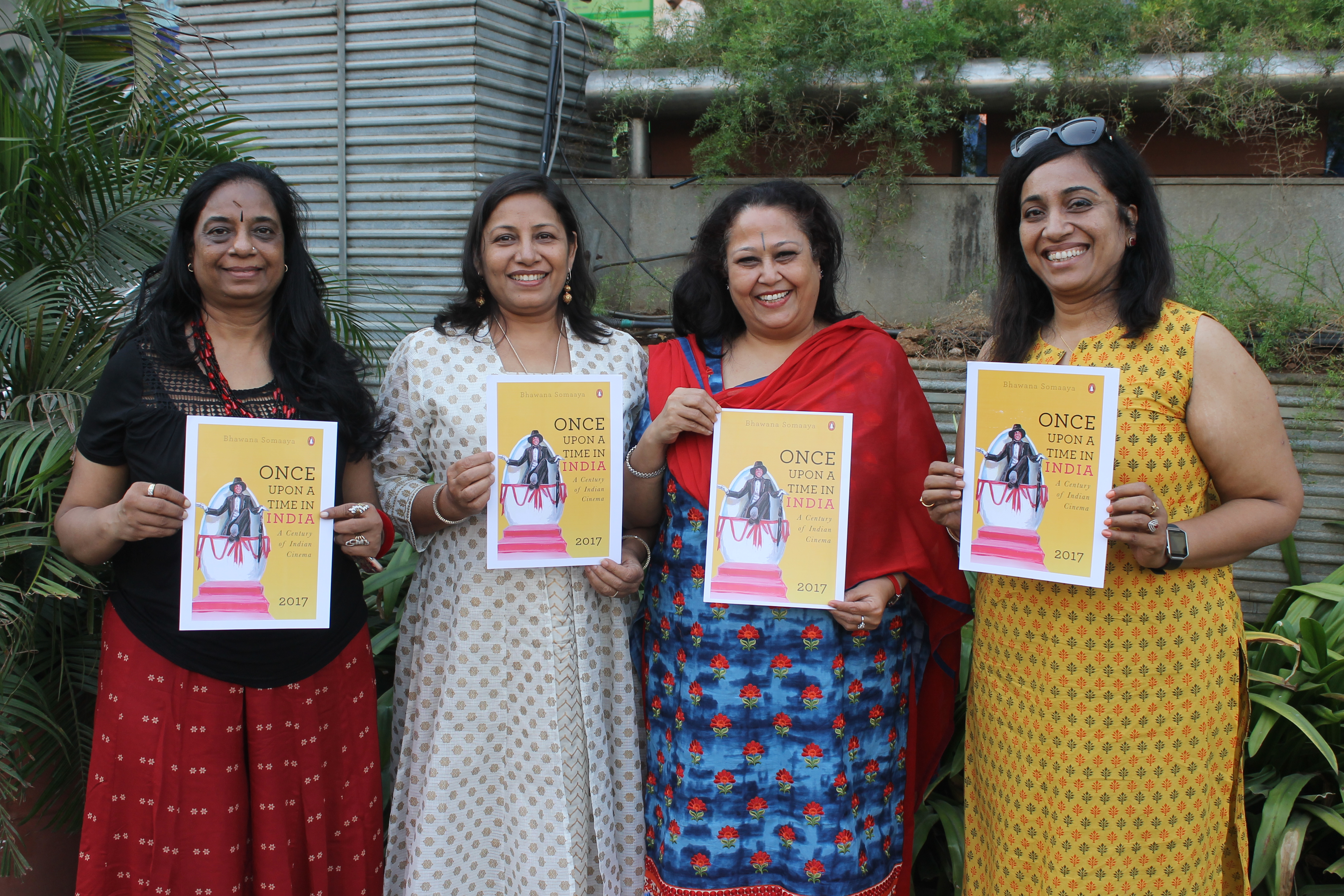
 

2000: “Machli…! Woh main kha gaya mast tel mein fry karke kha gaya. Tujha maila” Paresh Rawal/ Hera Pheri

2001: “Na koi maarta hai, naa koi martaa hai”Manoj Bajpai/ Aks

2002: “Kaun kambakht bardasht karne ke liye peeta hai…Main peeta hoon ki main saans le sakun” Shahrukh Khan/ Devdaas

2003: “Aye Maamu, jadoo ki jhappi de daal  aur baat khatam” Sanjay Dutt/ Munnabhai, MBBS

2004: “Who kehte hai yeh tera  deshnahi, phir kyun mere desh jaisa lagta hain…Who kehte hain main unn jaisa nahi, phir kyun mujhj aisa who lagta hain” Preity Zinta/ Veer Zaara

2005: “Yeh world hai naa world, iss mein do tarah ke log hote hain, ek, joh saari zindagi ek hi kaam karte rehte hain aur doosre, joh ek hi zindagi mein saare kaam kar dete hain” Amitabh Bachchan/ Bunty aur Babli

2006: “Ab tak jiska khoon naa khaula; who khoon nahi, wo paani hain! Jo desh ke kaam naa  aye who  bekar jawani hain”Aamir Khan/ Rang de Basanti

2007:  “Main apni favourite hoon” Kareena Kapoor/ Jab We Met

2008: “Zindagi ki khushiyo ka batwara shankh aur azaan ki awaaz se tay nahi hota” Naseerudin Shah/ A Wednesday

2009:“Bachcha kabil bano, kabil … kamyabi toh saali jhakh maar ke peeche bhagegi” Aamir Khan/ 3 Idiots.


*No excerpt from the book can be used without prior permission. The book is also available on other online portals such as Snapdeal, infibeam and on bookstore websites such as Crossword, Landmark and Sapna. Apart from this the book is available at all bookstores.

@bhawanasomaaya

My previous posts can be visited on the following link:

http://bhawanasomaaya.blogspot.in


Phata Poster Nikla Hero… – Day 998

By Films

wednesday

The nineties had Amitabh Bachchan still holding fort and the three Khans and Devgn and Kumar marking their place under the sun


1990: “Naam: Vijay Chauhan, baap ka naam: Dinanath Chauhan, pura naam Vijay Dinanath Chauhan, maa ka naam, Suhasini Chauhan”Amitabh Bachchan/ Agneepath

1991: “For your naughtiness I will eat a papad and you will get a jhapadAnupam Kher/ Dil Hai Ki Manta Nahi

1992: “Aakhri chand second hi toh haaraur jeet ka faisla karte hain” Aamir Khan/ Jo Jeeta Wohi Sikander

1993: “Taareekh pe taareekh milti rahi hain lekin insaaf nahin milta, milti hain to sirf taareekh” Sunny Deol/Damini

1994: “Jab gaaon main bachchha rota hain,to uski maa kahti hain ki beta soja soja warna crime master Gogo aajayega”Aamir Khan/ Andaz Apna Apna

1995:“Bade bade deshon mein aaisi choti choti baatein hoti rehti hain” Shah Rukh Khan/ Dilwale Dulhaniya Le Jayenge

1996: “I hate you very much” “And you are very, very ugly” Monisha Koirala, Salman Khan/ Khamoshi the Musical

1997: “Kahi na kahin, koi na koi mere liye banaya gaya hain aur kabhi na kabhi main use zaroor milungi” Madhuri Dixit/ Dil Toh Pagal Hai

1998: “Pyar dosti hain, agar who meri sab se achchi dost nahin ban sakti, to main use kabhi pyar kar hi nahi  sakta kyunki dosti bina toh pyar hota hi nahin, simple, pyar dosti hai” Shah Rukh Khan/ Kuch Kuch Hota Hai.

1999: “Sameer hawaka jhokha” Zora Saigal/ Hum Dil De Chuke Sanam.


*No excerpt from the book can be used without prior permission. The book is also available on other online portals such as Snapdeal, infibeam and on bookstore websites such as Crossword, Landmark and Sapna. Apart from this the book is available at all bookstores.


@bhawanasomaaya

My previous posts can be visited on the following link:

http://bhawanasomaaya.blogspot.in

Jiski Biwi Gori Ya Biwi Number 1 – Day 997

By Films
tuesday

.

The eighties packaged formula films and Amitabh Bachchan continued to deliver memorable dialogues


1980: “Ishwar sab ko dhokha de sakta hail ekin maa ke dil ko nahi” Durga Khote/ Karz

1981:Hum jahan par khade hote hai, line wahan se suru hoti hainAmitabh Bachchan/ Kaalia

1982: “I can talk English, I can walk English, I can run English because English is a very phunny language” Amitabh Bachchan/ Namak Halal

1983:  “Jinke ghar sheeshe ke hote hain, who batti bujha ke kapde badalte hain” Prem Chopra/ Souten

1984: “Mooche ho to Nathulal jaise ho….warna naa ho” Amitabh Bachchan/ Sharaabi

1985: “Aapmein se Arjun kaun hain?” Dimple Kapadia/ Arjun

1986: “Ek ladki apne gale mein kissi ladke ka photo isliye rakhti hai ki wo use pyaar karti hai” Sridevi/ Aakhri Raasta

1987:“Mogamo khush hua”Amrish Puri/ Mr. India

1988: “Rishte mein to hum tumhare baap lagte hain, naamhai Shahenshah” Amitabh Bachchan/ Shahenshah

1989: “Dosti ka ek usool hai, madam, no sorry, no thank you” Salman Khan/Maine Pyar Kiya


*No excerpt from the book can be used without prior permission. The book is also available on other online portals such as Snapdeal, infibeam and on bookstore websites such as Crossword, Landmark and Sapna. Apart from this the book is available at all bookstores.

@bhawanasomaaya

My previous posts can be visited on the following link:

http://bhawanasomaaya.blogspot.in