Dhanteras is more than money (Day 1488)

By Uncategorized

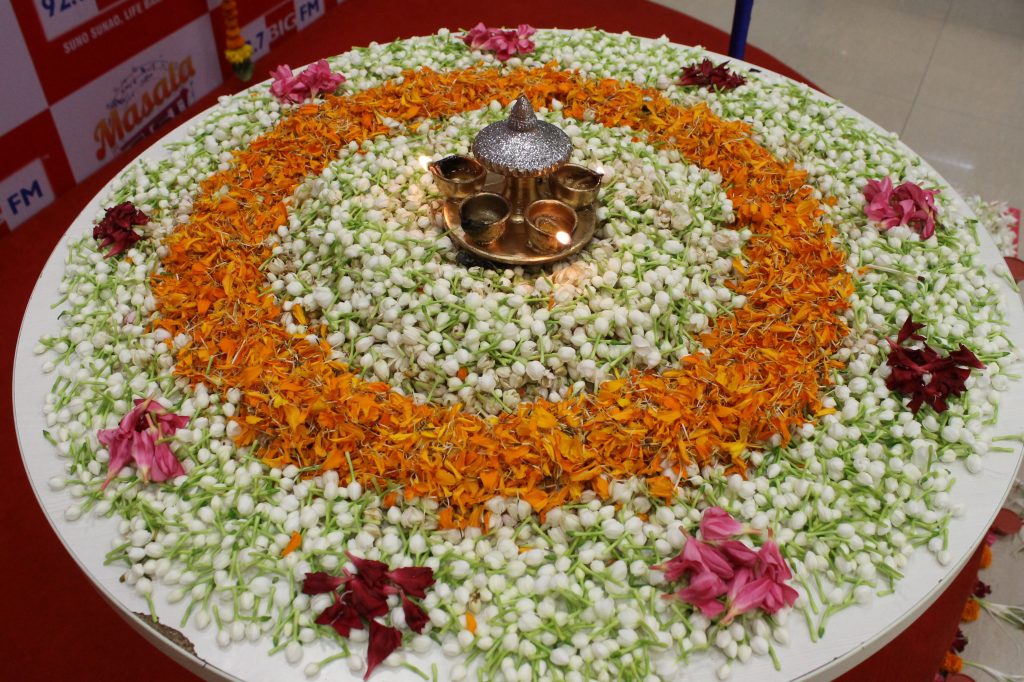
It is the day you open the account for the next year business and which is why Gujratis call it Chopda Pujan. The new books are placed before the Gods and after a puja by the pundit who draws a swastika on the blank page with a new date you begin work a few days later.

On Dhanteras like on Dassera marigold torans are adorned on the entrance and in the house.

From the time I can remember homes/ cupboards/ drawers are cleaned to shine before Dhanteras. Mother always said that if the home is not shining then Goddess Lakshmi will not visit the door.

Strarting on this day, mother kept the lights on in every room till it was time to go to bed, reason, I guess the same, Goddess Lakshmi should be able to detect our home from a distance and come home without obstacles.


@bhawanasomaaya

Imagine Dragons and more (Day 1487)

By Uncategorized

Imagine Dragons, whose single Natural has spent eight weeks at No. 1 Alternative radio, appear in the arcade-based video (watch for the Disney Easter Eggs). In the movie, video-game bad guy Ralph struggles with his evolving friendship with fellow misfit Vanellope von Schweetz.


According to Imagine Dragons’ lead singer Dan Reynolds, the film’s emotional themes are reflected in the song Zero. “They are compelling because they are real to each of us and the journey of feeling nothing and trying to recognize your worth as a human is an important part of life” says Reynolds.


Dave Meyers directed the music video. Meyers was recently recognized at the Video Music Awards for video of the year Havana by Camila Cabello ft. Young Thu, best pop video No Tears Left to Cry by Ariana Grande and best visual effects All the Stars by Kendrick Lamar ft. SZA.

Featuring singles Natural and Zero, Imagine Dragons will release their fourth studio album, Origins.


@bhawanasomaaya 


Film Heritage Foundation (Day 1486)

By Uncategorized

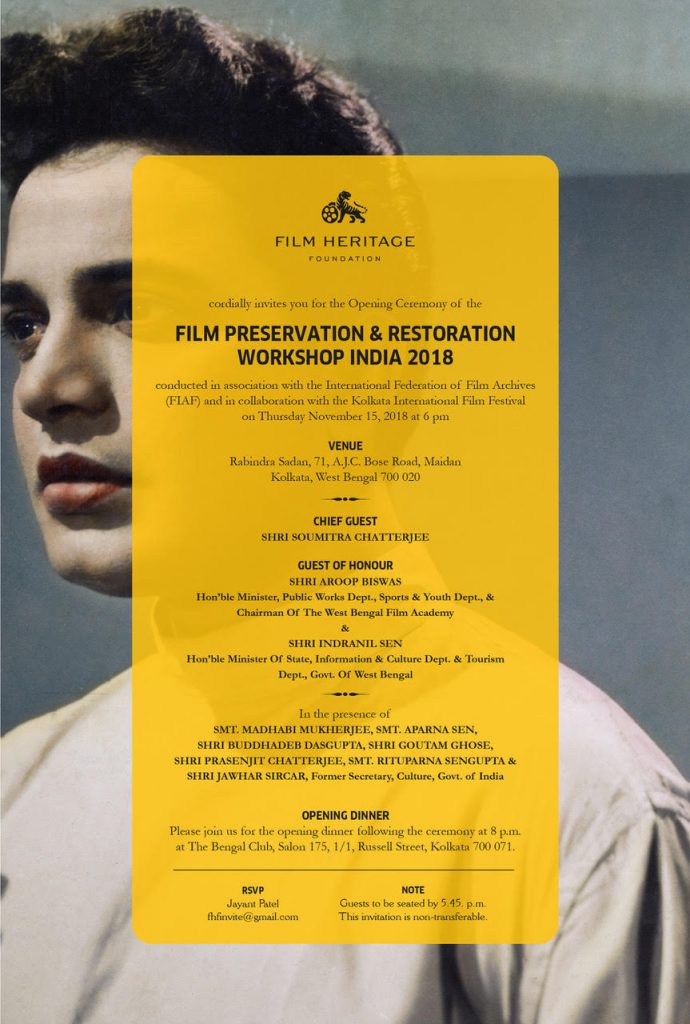
The best thing to happen to the film industry in recent times is the formation of the Fim Heritage Foundation. Ever since Shivendra launched the Film Preservation & Restoration Workshop India 2018 (FPRWI 2018) he is going all out to unite film fraternity of all languages. On November 15 Singh is introducing the foundation to Bengal film fraternity.


The Film Preservation & Restoration Workshop India has been a pioneering initiative of Film Heritage Foundation. FPRWI 2018 is being conducted for the fourth successive year and for the first time in Kolkata and represents their continued commitment to training future film archivists and restorers. Actor Soumitra Chatterjee has agreed to be the Chief Guest on this occasion.


Prominent actors and filmmakers like Madhabi Mukherjee, Aparna Sen, Buddhadeb Dasgupta, Goutam Ghose, Prasenjit Chatterjee, Rituparna Sengupta including Jawhar Sircar, Former Secretary, Culture, Govt of India have confirmed their presence at The Bengal Club, Salon 175, 1/1, Russell Street, Kolkata 700 071.


@bhawanasomaaya


Kaagaz Ki Kashti (Day 1485)

By Uncategorized

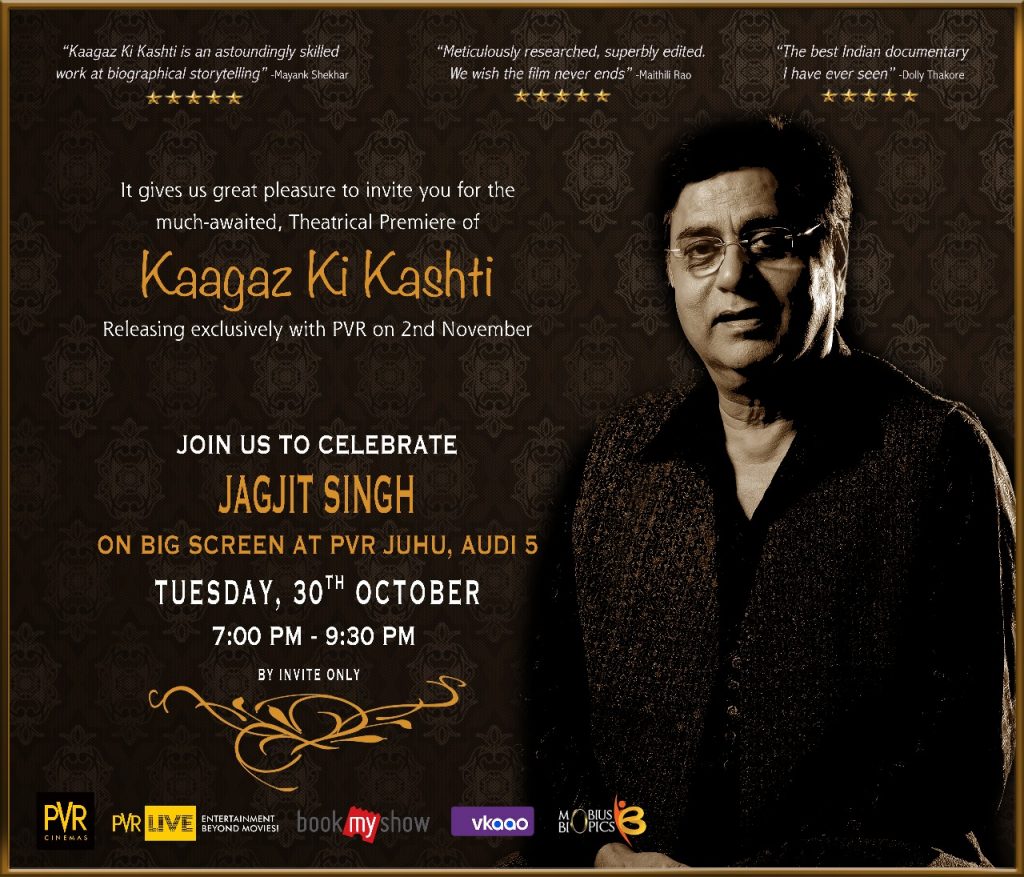
In an era when Bollywood music ruled the Indian households, Jagjit Singh made Ghazals a necessity of every music lover’s collection. With a voice stirring enough to break or mend your heart, he brought to life some of the most fascinating compositions of all times with unparalleled charm. Kaagaz Ki Kashti traces the life journey of a down-to- earth, small-town boy, who made it big by breaking through the norms and revolutionizing the Ghazal scenario, by texturing traditional Ghazal singing with western instrumentation and making it simple and hummable, enticing new listeners into becoming Ghazal fans.


Tracing three converging tracks – the struggle and stardom in his musical career, the love and loss in his personal life and the scope and limitations in the music scenario of the times, the film covers not just Jagjit Singh’s life, but also of the monumental legacy he has left behind. Through in-depth conversations with friends, family, colleagues and through archival footage, director Bhramanand Singh gives you intimate insights into the maestro and his genius.


@bhawanasomaaya

Bird of Dusk (Day 1484)

By Uncategorized

Indian writer- director Rituparno Ghosh from Bengal is a larger than life cultural icon whose influence spread far beyond his films. Bird of Dusk  directed by  Sangeeta datta is pegged on the director’s own interviews and conversations (from archives) and his personal memoirs entitled First Person and conversations with cast and crew feature Soumitra Chatterjee, Sharmila Tagore, Aparna Sen, Prosenjit Chatterjee, Nandita Das, Arjun Rampal, Konkona Sen and Mir. His cinematographer; Aveek Mukhopadhyay, editor Arghyakamal Mitra and music composer; Debajyoti Mishra discuss Ghosh’s craft of filmmaking and international festival curators (Berlin/London/Spain) endorse the filmmaker’s position in the world cinema-scape.


Rituparno lived and worked in the city of Kolkata which he loved dearly and his life and work is a product of his city and its culture. The story of Rituparno is interrelated to the changing cityscape of Kolkata as the film is shot over the course of a year. The recent writing down of Section 377 is pertinent because Ghosh was the first major filmmaker who used his public influence to make the concept of third gender more public. He was the first gay/trans filmmaker who stepped out of the closet 10 years ago after suffering social stigma in his early years. His bold assertion of identity in his own life (and in his last three films) have made him a cult figure and strongly influenced the younger generation. His statement “Be who you want to be” is today a youth slogan.


Director Sangeeta Datta held a long working association with Ghosh and was witness to the dramatic reception of his cinema, his single-handed boost to the Bengali industry, his star status and his fight for gender free identity. This is Datta’s tribute to her friend and collaborator and to their much loved city of Kolkata. In Mumbai for the MAMI festival to screen her film, Datta recalls that though she professionally associated with  the filmmaker when she edited a book on him titled Rituparno Ghosh: Cinema, Gender and Art, Routledge and later became his assistant on various films.


@bhawanasomaaya

Women in Film (Day 1483)

By Uncategorized

For a long time women have been debating that there should be no discrimination against them as actors and filmmakers but is that a reality both in India and abroad? I don’t think so because if that was true we would not be discussing gender at panel discussions in film festivals. The fact that we are, we have a long way to go.


This year the MAMI festival had a stimulating seminar titled Women in Film. It was among the third edition of brunch, hosted to celebrate gender-equal cinema and attended by leading male and female actors, directors, screenwriters and industry professionals. The highlight of the afternoon and I would say of the festival was that this year, Oxfam India has invited a young gender-champion Naaz Parveen from Patna, Bihar.


Naaz is a young Muslim girl who is not only a community leader but has also fought patriarchy, child marriage in her community and created awareness along with local NGOs about sexual reproductive rights in her community.


@bhawanaasomaaya

Movie Review: Baazaar (Day 1482)

By Uncategorized

Film: Baazaar

Date: 26.10.2018

Director: Gaurav Chavla

Writers: Nikhil- Parvez-Aseem

Cast: Saif Ali Khan, Radhika Aapte, Chitrangda Singh

Background Score: John Stewart Eduri

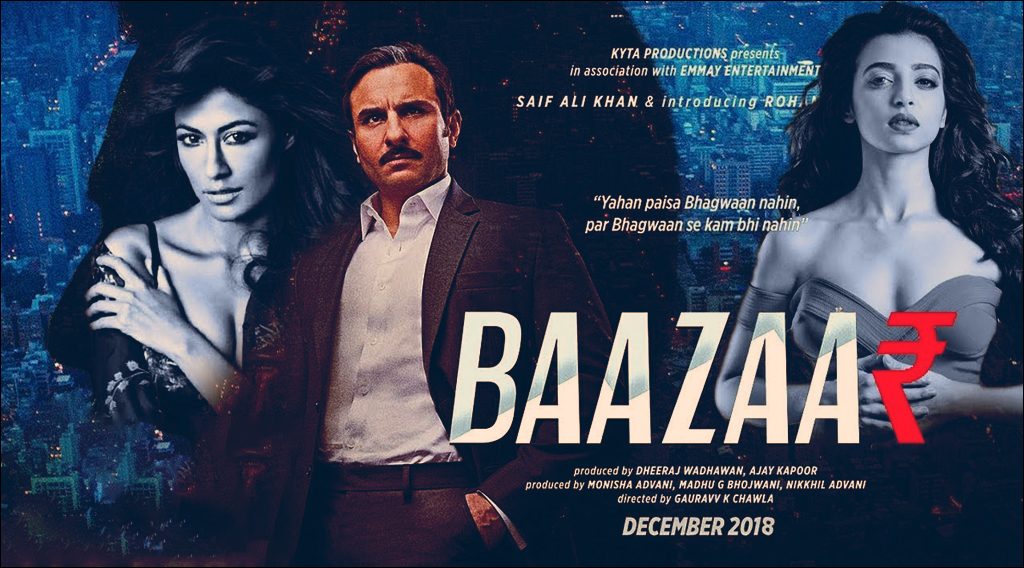
 Shakun Kothari/ Saif Ali Khan is the bull of the stock market and an indulgent father of his two daughters. When a video of him in a spat with a rival gets viral his daughters are ostracized in school and come home crying.

That night Shakun tells bedtime stories to his daughters and asks, ‘Who do you like the Batman o the Superman?’ ‘The Superman’ responds the ten-year-old, ‘The Batman does not seem good’. ‘That is the problem’ says Shakun, ‘People assume he is not good’ and that is the crux of the film.

What makes the film interesting is the refreshing premise – the stock market and the stock traders. This is the first time we have an intimate glimpse into the ongoings of the Dalal Street and the director captures the frenzy of the rise and fall of stocks in a manner that is thrilling.

The narrative is energetic, the characters unconventional and the shot taking refreshing.

The first half moves like a rocket – smooth, sharp and precise to an extent that you resent the interval. The second half, unfortunately, slackens in pace and meanders towards a not so surprising climax.

There are many ways to describe this film; you can call it a story of greed and ambition, of power and corruption, a story of a mentor and his protégée or a story of a sprint and a marathon runner.

No story of ambition is ever complete without a battle of the conscience, and the writers cleverly address the morality of the characters engaging their respective families with all the intrigue and complexities.

The plus of the film is the craft, the background score, and the production design. The writers introduce us to the vocabulary of the stock market with references like ‘Out of line’ and ‘Bazaar chalu che’ that add to the narrative. The minus is the dragging second half that could have been edited by 15 minutes.

All the performances do justice. As Mandira who watches Shakun succeed and alter as a man, Chitrangda Singh has sensitive moments. As Priya Rai, colleague and beloved of Rohan Mehra, Radhika Aapte projects many shades to her character. As the young trader who befriends the shark, Rizwan Ahmed/ Rohan Mehra is easily the surprise packet of the film. Mehra mixes anxiety with ambition and portrays the fear and fire of a small town guy with precision and restraint that is admirable.

And finally Saif Ali Khan, there’s something special about the actor in the manner he inhabits the strangest of characters from contrasting milieus and makes them believable. Clad in silk dhoti that spreads over a bare chest he is introduced as the affluent community leader greeting ‘Michamidukhdam’ to all and yes, he gets the Gujarati accent right.

Whether he is at home, outside, at work, with confidantes or with his detractors, Saif never loses grip on his character ably facilitated by a detailed screenplay.

Debut director Gaurav Chavla gets well most of it right and deserves a dekho in the theatres. Also, like the Batman and the Superman, it’s interesting how the perception of a title alters from time to time. In the 50s Bazaar told the story of a courtesan. In the 80s Baazaar delved on sale in marriage and in 2018 Bazaar is quite literally about business.

I rate Baazaar with 3.5 stars.

Bhawana Somaaya
Picture Postcards (Day 1481)

By Uncategorized

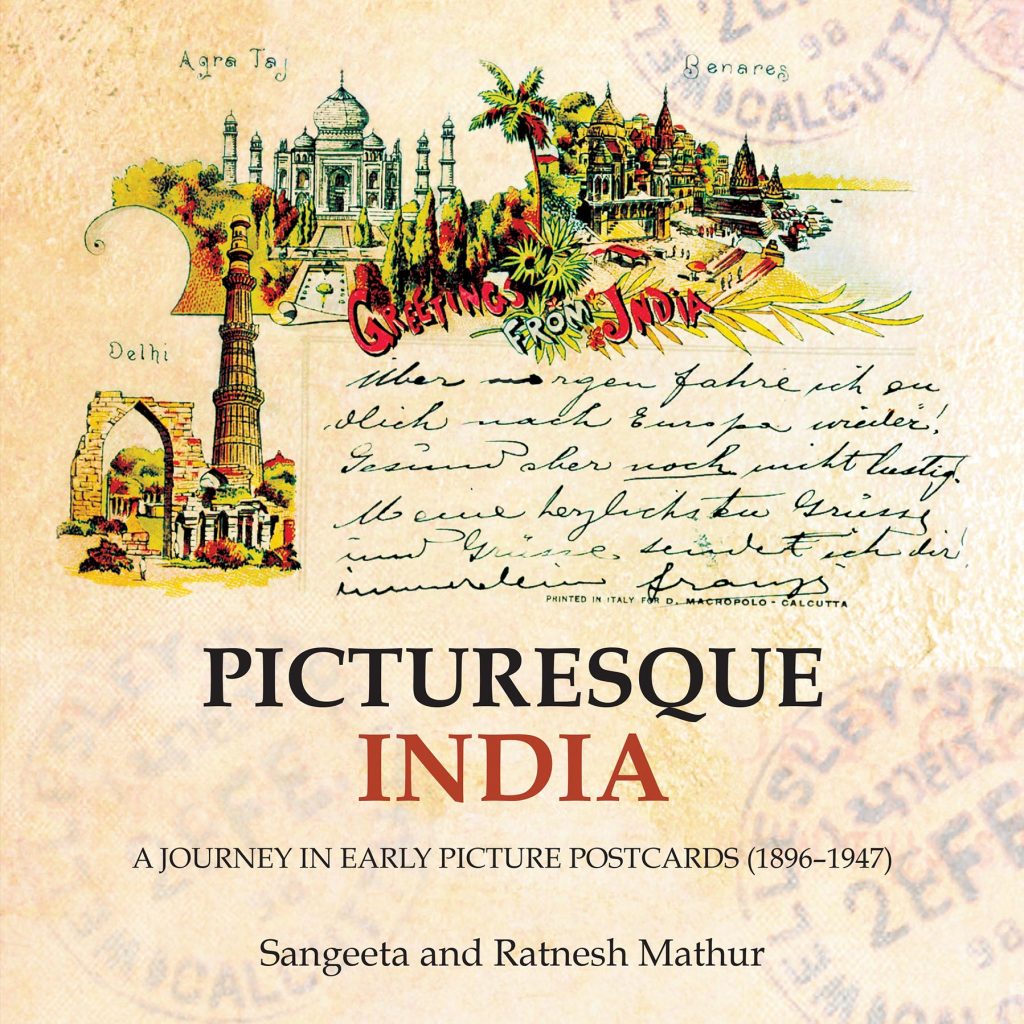
With the dawn of the twentieth century, at the height of the British Empire, came significant changes in the landscape of India—formation of new capital cities in the plains and summer retreats in the hills, evolution of towns or nagores and pores, growth of cantonment towns with their military and civil lines, development of ports or pattanams and creation of cultural, educational and trading centers, all increasingly well connected by an extensive rail, road and, later on, air network.

The 550 postcards featured in this book visually document this growth, while also capturing evidences of earlier times in India’s fascinating poly temporal towns. The postcards are divided across six chapters representing six regions within India and Pakistan, as they were a hundred years back. Through these picture postcards and the supporting text, the readers can vividly imagine what it would have been like to travel by road or rail across India during the period 1896–1947.

An attractive and nostalgic record of the topography of the time, these picture postcards are an untapped resource for those interested in the evolution of cities, town planning, architecture, ethnography, sociology or, simply, travel.

Authors Sangeeta and Ratnesh Mathur have lived and worked in many cities in Asia and Europe. They began building a personal collection of Indian comics, books, maps, stamps, travel and film posters, music CDs and international film DVDs in the initial years of their travels. In 2003 they relocated to the Czech Republic, and after visiting central Europe’s museums and antique shops, and regularly attending hobby club meetings, they began expanding their collection with a specific aim of creating a museum back in India. They added Indian picture postcards, lithographs, antiques in glass and porcelain, coins, princely state insignia and weapons, etc. In this endeavor, their focus, however, remained on the visual history of India and its towns.

@bhawanasomaaya