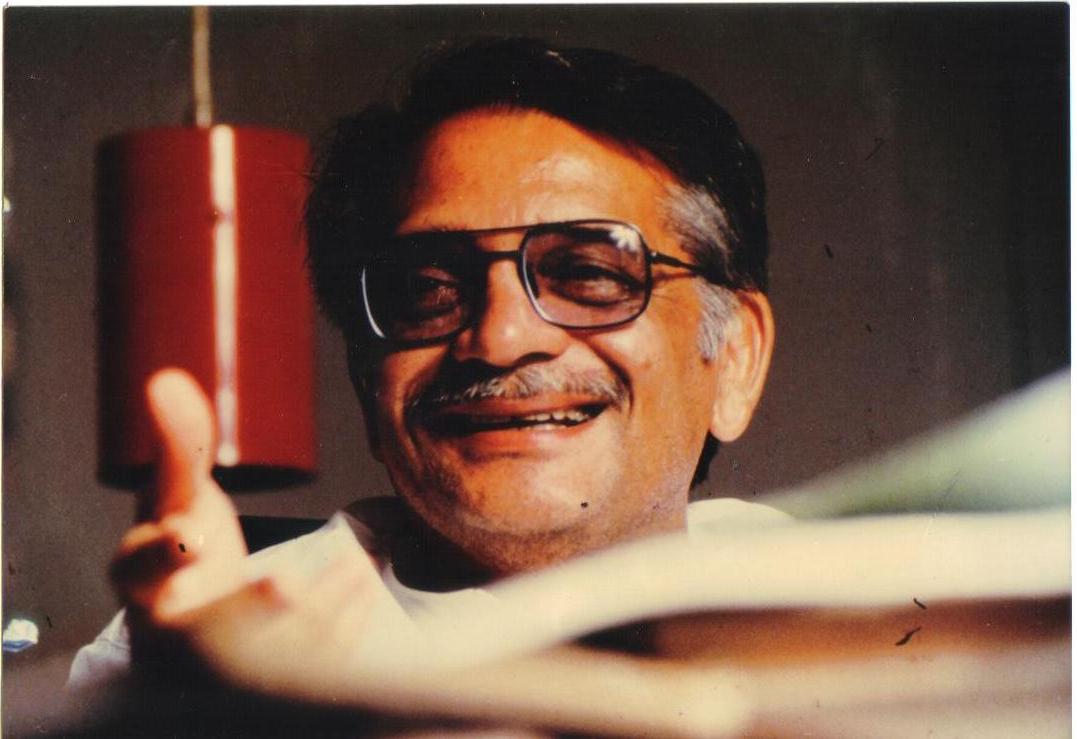
Few writers in India have captured the subtleties of human emotion quite like Gulzar. His poems, songs, and stories move with a quiet force — blending everyday language with profound thought, and moments of stillness with bursts of sharp insight. Whether writing about love, loss, rain, revolution, or the texture of time itself, Gulzar’s voice has remained unmistakably his own.
His poetry — often written in Hindi, Urdu, and Punjabi — bridges the worlds of the intimate and the political. In verses like “Raavi Paar” or “Yeh Kaisa Aalam Hai”, he speaks of the pain of Partition, the ache of memory, and the beauty that still insists on blooming.
As a lyricist, Gulzar reshaped film songwriting in India. From the philosophical calm of “Tujhse Naaraaz Nahi Zindagi” to the playful poetry of “Humne Dekhi Hai Un Aankhon Ki Mehekti Khushboo”, and the earthy metaphors of “Chhaiyya Chhaiyya”, his songs are etched in popular memory.
Gulzar’s work is also deeply literary, shaped by a love of language and storytelling. As a translator, editor, screenwriter, and short story writer, he has contributed immensely to Indian letters beyond cinema. His books — including “Pukhraj”, “Triveni”, “Footprints on Zero Line”, and his translations of Tagore — continue to be read widely for their clarity, empathy, and lyricism.
In all these forms, Gulzar remains the poet of inner worlds — illuminating the unnoticed corners of emotion, history, and identity. His words have not only entertained but helped generations process their own stories. As the Jnanpith award recognises the arc of his literary life, it’s this quiet but unshakable humanism that lies at the heart of his legacy.