Shaping Of Seed Day 1691

By Uncategorized

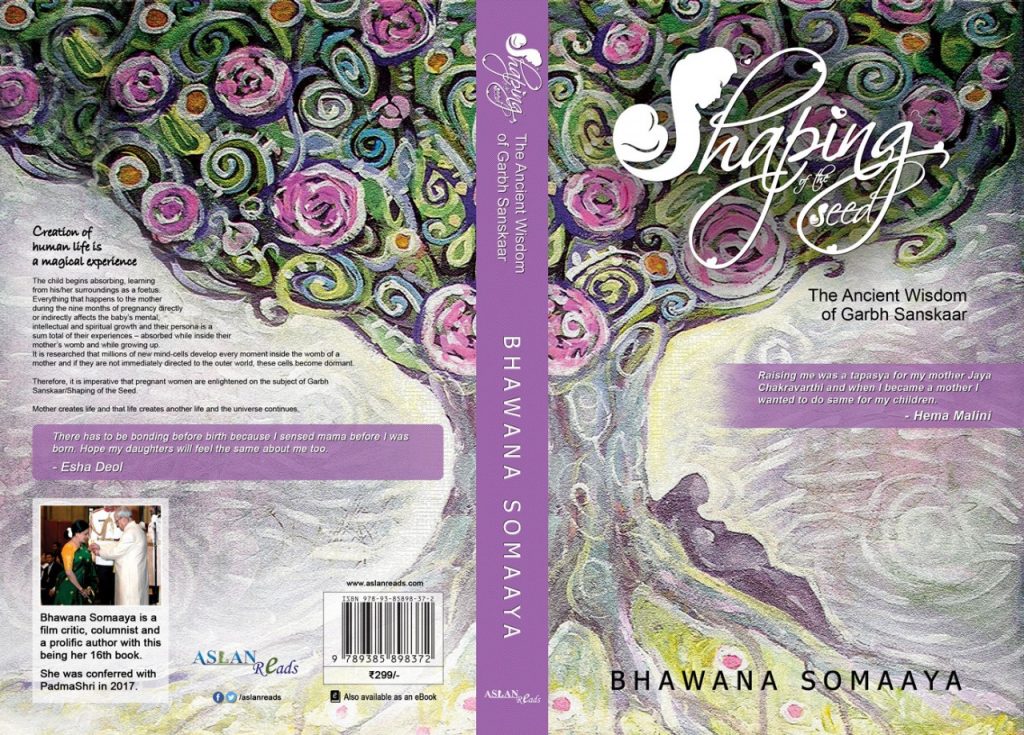
It is researched that millions of new mind-cells develop every moment inside the womb of a mother and if they are not immediately directed to the outer world, these cells become dormant. Therefore, it is imperative that pregnant women are enlightened on the subject of Shaping of Seed- The Ancient Wisdom of Garbh-Sanskar so that they make optimum use of the information and nurture their unborn.

It is a misconception that the child begins to learn after he/she is born. The child begins absorbing learning from his/her surroundings as a foetus. Everything that happens to the mother during the nine months of pregnancy directly or indirectly affects the baby’s mental, intellectual and spiritual growth.

And if this is true, do we as parents invest adequate time and effort into the growth and shaping of our child? Do we pause and ponder if we have the requisite qualities to assume responsibility of bringing a new life into the universe? Most new parents aspire for a healthy, normal baby but before that they must aspire to become aware and conscious parents.

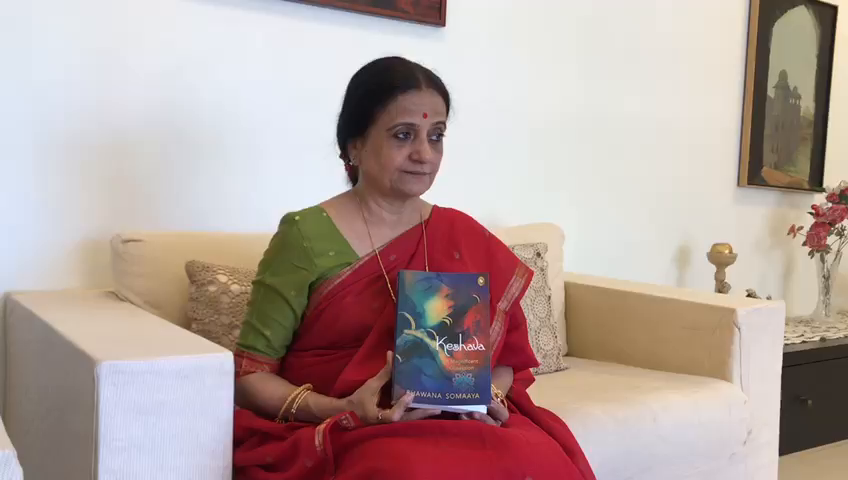
#ShapingOfSeed published by #AslanReads can be pre-ordered on https://www.amazon.in/dp/B07ZZ8F8JD

@bhawanasomaaya

Countdown begins- Day 1690

By Books

All the mothers who bring a new life into the universe and all the fathers who make this possible…

The book is a result of innumerable conversations with doctors, surgeons, psychologists, parents, and children in India and abroad. The names have been changed to preserve the It is believed that the journey of an individual begins inside his/her mother’s womb. The child is a result of its genes and its environment and parents, if they are evolved, have the power to affect, alter and influence the moral, emotional and intellectual fiber of the child right from the time of conception.

Creation of human life is a magical experience. While our ancestors described it as a blessing from the Almighty, our Vedas and Upanishads dictate that everything that happens in the universe is predetermined from the moment the foetus takes root in the uterus.

Revealing the title and the cover of my new book tomorrow, so watch this space….

@bhawanasomaaya

Movie Review – Motichoor- Day 1689

By Uncategorized

Athiya is the surprise packet


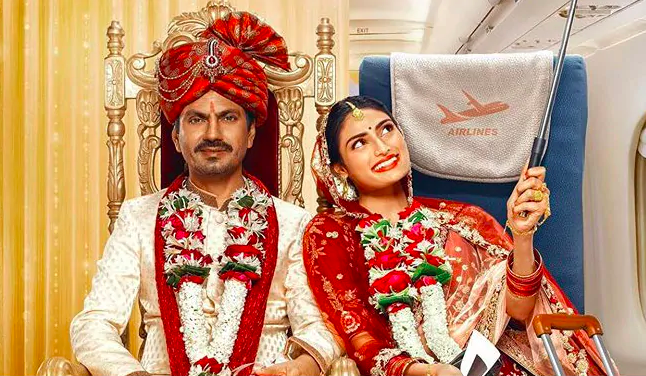
Film: Motichoor Chaknachoor

Date: 15.11.2019

Director: Debamitra Biswal

Writer: Bhupendra Singh/ story, screenplay Debamitra/ dialogues

Cast: Nawazuddin Siddiqui, Athiya Shetty, Vibha ChibberNavni Parihar


In a meeting organized for an arranged marriage between the two families, the prospective bride in an isolated corner asks the prospective groom if he approves of her. The hero says it is not about approval because all that matters in a marriage is that she is a woman and he is a man. Never heard something so derogatory!.


The film’s director Debamitra Biswal had filed a commercial arbitration petition on Bombay High Court which had ordered a stay on the release of its trailer, over non-payment of dues by the makers of the film Woodpecker Movies Private Limited; the stay was later lifted and which is probably the reason why the film got released without adequate promotion.


Set in Bhopal, Madhya Pradesh Motichoor Chaknachoor tells the story of two families who are neighbors. The elder son Pushpinder /Nawazuddin Siddiqui of Vibha Chibber has a job in Dubai and comes home every few years during his holidays. Every time, his mother plans to get him married during his stay but always Pushpinder returns to Dubai single and is today 36 unmarried and desolate.

Anita/ Athiya Shetty, daughter of the other neighbor/ Navnit Parihar is a rebel of sorts who has turned down innumerable proposals because the groom does not match her expectations of settling down in some exotic foreign location. When Ani/ Anita learns that Pushpinder works as an accountant in Dubai she decides to woo the simpleton and fulfill her dream of moving out of small-town Bhopal.


Written by Bhupinder Singh Motichoor Chaknachoor revives memories of 70’s parallel cinema when life was simple and relationships uncomplicated. Marriage and relationships were important to our stories then and continue today. This one too is about attraction, attachment and realization and which is why the innocence revives memories of Jaya Bhaduri’s Guddi and Uphaaar

The confusing bit for me is that the film is progressive and regressive alternately, for instance, the hero, the heroine and their respective families are obsessed with marriage like being single is a curse. The hero’s mother has a full proof plan to absolve all financial crises with dowry obtained from her son’s marriage. In a light-hearted scene, an aging widower interested in his neighbor retorts ‘How can she be single and busy, strange!’

It is refreshing to watch Athiya take the initiative and not wait for Nawaz to propose to her, interesting that her aunt is single and spunky. The most forward-thinking scene comes from Athiya’s father when the married daughter comes home seeking his support. He refuses point blank with ‘If you are old enough to plan your wedding you are responsible enough to resolve domestic quarrels’.

Motichoor Chaknachoor addresses marriage, dowry, joint family, community living and also focuses on the artificial world created by the FaceBook culture. Quite honestly there is little to criticize in the film except the over made up mummies who sit at home with full eye makeup. What works about the film is the story, dialogues, lyrics and score by Abhijit Vaghani.

All the performances are convincing. Nawazuddin Siddiqui is as always first-rate but the best performance in the film comes from his screen mother Vibha Chibber reminds you of vintage Dina Pathak. Athiya Shetty after Hero is a complete transformation. She is the surprise packet of the film and proves that it is never over till it is over. Shetty is confident and sparkling!

So must you watch Motichoor Chaknachoor, I’d say eating sweets in proportion has never harmed anybody so why to regret you didn’t try this ladoo. I rate Motichoor Chaknachoor with 3 stars.


Bhawana Somaaya
 

Krishna & Bachchanalia- Day 1688

By Books, Uncategorized

Krishna – The God who lived as Man is a trans-creation of Kajal Vaidya Oza’s Krishnaayan in Gujarati. It is my first at outside of cinema and there are too many miracles associated with it to be passed off as co-incidences. Lord Krishna is the eighth child of his parents; I am the eighth of my parents. It is my eighth book and it was published in 2008 and these are sufficient reasons to justify why the book occupies a special place in my heart and will continue to do so for ever.

A decade ago I was heading a film portal focused on Amitabh Bachchan and was compiling credits and trivia of all his films. A chance meeting with Neville Tulli of Osians was the beginning of a magnificent book Bachchanalia (2009) published a decade after my first The Legend on the actor in 1999. Bachchanalia is a celebration of an actor’s extra-ordinary body of work spanning 4 decades and 100 plus films.

My tenth book and third book on Bachchan Amitabh Lexicon (2011) is a compilation of selective words from the alphabets of the English language associated with different scenes from the actor’s body of work – scenes where he made you cry, laugh and all shook up.  Like he says in his film Namak HalaalLo karlo baat…aaree English to aisi aave hain ke I can leave angrez behind…I can talk English, I can walk English, and I can laugh English…”

To be continued…

@bhawanasomaaya

Stories & Biographies- Day 1687

By Books, Uncategorized

Story So Far was an initiative by India Express Group to document Hindi cinema from its origin to the year of publication 2003. Books like these are made special by rare pictures available to me from the Screen library, a tame. My fifth book Cinema Images & Issues (2004) are a collection of film essays – some explored as academic study, while some retained as stubborn memories that refuse to fade.  The concerns for the issues, I admit, came in much later after I had sufficient exposure to the world of movies and the confidence to disagree/ debate on what I watched on screen.

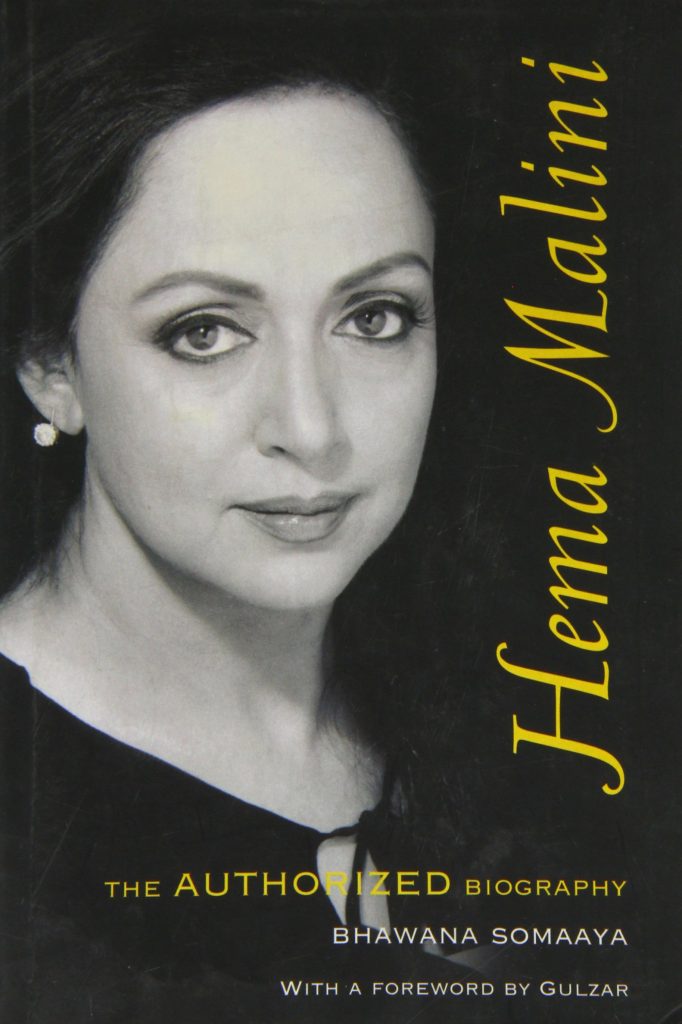
I had no idea that attending a dance ballet by Hema Malini playing Draupadi and commenting on it in my editorial would result in my sixth book Hema Malini – Authorised Biography (2006). This was my second biography after Amitabh Bachchan co-incidentally both superstars of the 70s and the 80s. Initially Hema Malini wanted a book only on her as a dancer but I insisted on including the woman and the actor because I knew publishers would not be happy printing a boo dancer and Hema understood and accepted my decision. The pressures and the process of journeying her life and getting to understand her as a person is an experience I will always cherish.

It was an ordinary day and I was checking my mails when I came across Publisher Rohit Gupta of Pustak Mahal asking me for a quick/ easy read book on cinema. Fragmented Frames (2007) is a collection of essays delving on the genesis and growth of Hindi cinema, capturing the magic and the madness of show business. It travels you through varied subjects and phases of the dream world and was proudly released by Gulzar saab in Mumbai.

To be continued…

@bhawanasomaaya

Salaam Bollywood- Day 1686

By Books, Uncategorized

I’m often asked how long it takes to write a book, it is never an easy question to answer because I work on my books along with my regular job so it is difficult for me to keep a track still I would roughly describe it as year-long journey from the concept to its execution.

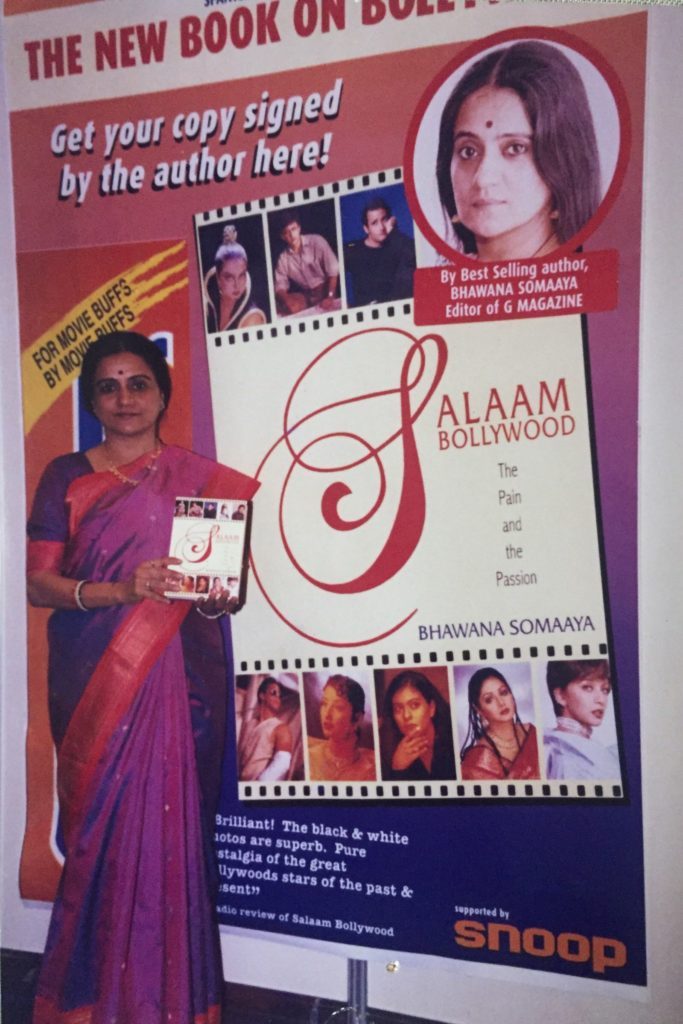
My second book, Salaam Bollywood (2000) tells about my experiences as a film journalist. In my early days I was often asked how it felt to be a film scribe and if I believed in the people I wrote about. I did. The book is about the other side of stardom. The better side, of creativity and compassion, of warmth and wisdom – that an outsider will never know…The irony however is that for those I write about, I will always remain the outsider. The book was originally titled Salaam Showbiz but my UK Publisher felt a title with Bollywood will bring better sales! He was right.

Take 25 (2001) is a tribute to the 80s decade, a lowly phase for the mainstream movies but an important decade in film journalism where writers were encouraged to do in-depth stories with the dream merchants. This was the golden phase for feature writing where actors opened their hearts and homes and we splashed their quotes in colour double spreads of art paper illustrated with glamorous pictures. The book captures a leisurely era and a baggage free mindset when life was innocent and joy was in small things.

To be continued…

@bhawanasomaaya

A book is born – Day 1685

By Books, Uncategorized

Most of the stories we read in childhood began with three famous words, long, long ago…

My story as an author began in the summer of 1999 when I penned a chronicle on Amitabh Bachchan profiling his life and times. My art director of the magazine I edited at that time illustrated my narrative with file pictures and the result was a book!

Amitabh Bachchan: The Legend was the first biography on a celebrity structured as a conversation and yet all the publishers I approached insisted that I rewrite the content as a narrative. I disagreed because I wanted to retain the voice of the actor and also the voices of those who worked with him – his leading ladies and his filmmakers and finally found somebody who agreed with me.

The 90s was an important decade in journalism because it introduced computers and the internet. The year 1999 ushered the electronic media and the first flash of the new millennium ‘paparazzi’, at that time understood as ‘euphoria’, was evident at the launch of my debut book in Mumbai’s leading book shop when the cameras could not stop clicking superstar Amitabh Bachchan!!

To be continued…

@bhawanasomaaya

Movie Review: Hellaro Day 1684

By Uncategorized

 Path-breaking

Film: Hellaro

Date: 08.11.2019

Director: Abhishek Shah

Writers: Abhishek Shah/ story, Abhishek, Prateek Gupta / screenplay, Saumya Joshi/ dialogues and lyrics

Ratings: 4 stars


In 1980 Ketan Mehta directed Gujarati film Bhaav Ni Bhavai that won the Best Film for National Integration. Now 39 years later, Gujarati cinema has once again come into focus with debut director Abhishek Shah’s Hellaro  being awarded as Best Feature Film at National Award 2019. In addition, 13 actresses from the film have been mentioned for Special Jury Award. This is the first Gujarati film to win both, the Golden as well as the Silver Lotus awards and is the opening film at the 50th International Film Festival of India to be held in Goa in November.


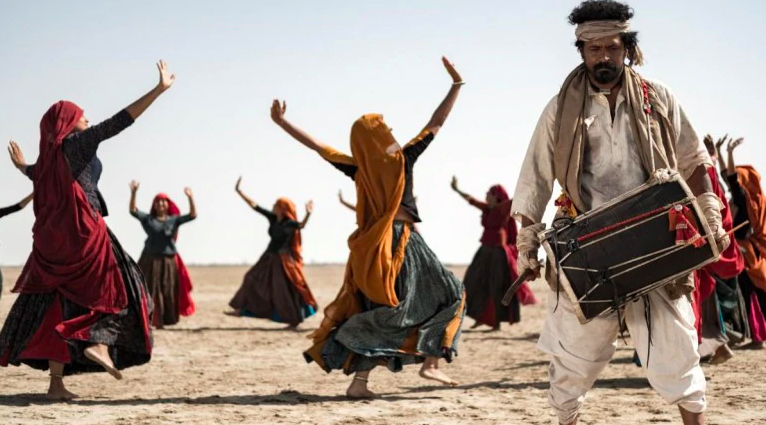
An entire village was created in the middle of the vast desert in the Kutch region of Gujarat and costumes prepared for everyone to retain a sense of continuity. Shot in the scorching summer of Kutch desert the film was completed in 32 days.


Hellaro tells the story of a sleepy village that has not seen rain in three years. The villagers believe it is the curse of the Goddess to punish them for all their wrong doings and are forever doing penance to meet her approval. Come Navratri and the men decide to dance all night to evoke the Goddess and seek her blessings. The women are instructed to fast all nine days and are abstained from celebrations of the festival. The discriminations are not restricted to just to the festival but are a part of their life. They work all day but aare forbidden to dream, desire or even to express themselves.

I recommend four reasons for watching Hellaro:

 One, the subject is novel and the idea of combining fact, fiction with folklore is intriguing because you are left wondering if this really happens and where? Set against the backdrop of emergency it uses the village as a metaphor for oppression, only in this case it focuses on the subjugation of women. Two, for the important issues addressed, without really beating the drums the film condemns the caste system, the patriarchal society and alters the female gaze through an engaging, involving and emotional narrative.

Three, never has dance been used as a means of change and the credit for this goes to the choreographer for presenting 8 imaginative garbas.  It is a visual delight to see the women move in swirling skirts in harmony. For the first time dance is not just used for entertainment but as a mode of self-expression, a reason for liberation and celebration. Four, the message, that oppression beyond limits is dangerous. One woman Kesar depicts courage to defy the system and the entire village is motivated.


So is there nothing wrong with Hellaro of course there is, the music could have been more melodious, the background score more dramatic, some scenes could have been more emotional, the desert could have looked more parched and the villagers more unkempt because of the heat, the day to night transitions could have been smoother but all this can be overlooked because the merits outweigh the demerits.


Hellaro excels in every department -editing/ production design/ cinematography/ writing/ choreography/ costume/ sets and there is both passion and detailing in everything.


Gujarati film Hellaro is released with English subtitles and language, in any case, has never been a barrier to appreciate good cinema. I applaud director Abhishek Shah and his team for a path-breaking film and rate Hellaro with 4 stars.


Bhawana Somaaya